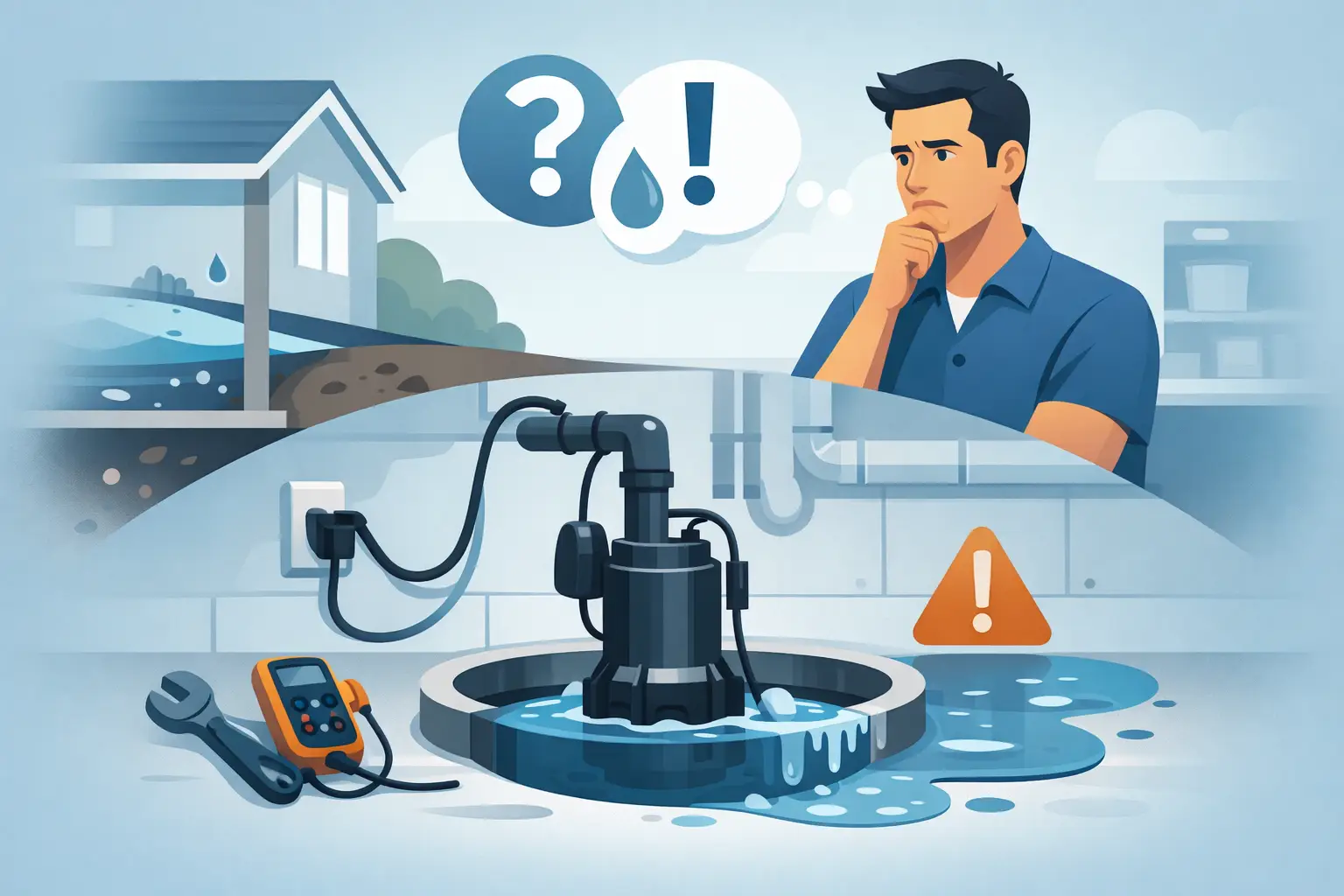
When your sump pump is not working, the problem usually shows up at the worst possible time – after heavy rain, during a storm, or when groundwater starts rising fast. A sump pump is one of those systems you rarely think about until it fails, and by then, every minute matters. If water is collecting in the pit and the pump is staying silent, running nonstop, or failing to move water out, you need to act quickly and carefully.
What to do first when a sump pump is not working
Start with the simplest question: is the pump getting power? A tripped breaker, unplugged cord, or failed outlet can stop a sump pump completely. In some homes, the pump plug and the float switch plug share the same outlet, and one can get knocked loose without anyone noticing.
If the outlet has power and the pump still does nothing, look inside the pit. Standing water, debris, or a jammed float are all common reasons a system stops working. You do not need to take the whole pump apart to spot obvious issues, but you do want to avoid reaching into water if there is any chance of an electrical problem.
If flooding is already starting, skip the trial-and-error approach and call for professional help. Water damage moves faster than most people expect, especially in finished spaces, commercial properties, and multi-unit buildings.
The most common reasons a sump pump stops working
A failed sump pump does not always mean the motor is burned out. In many cases, the issue is smaller, but you still need the right fix.
Power problems
No power is one of the most common causes. The breaker may have tripped, a GFCI outlet may have reset, or a storm may have caused a short interruption that affected the pump. If your area lost power entirely, the pump will not run unless you have a battery backup or generator support.
This is where the real trade-off shows up. A standard sump pump may work perfectly most of the year, but without backup power, it is vulnerable during the same storms that create the highest drainage demand.
Stuck or damaged float switch
The float switch tells the pump when to turn on. If it gets tangled, pinned against the basin wall, or weighed down by debris, the pump may never activate. In some cases, the float rises but the switch itself has already worn out.
A stuck float can also cause the opposite problem – the pump runs constantly, even when the water level has dropped. That can burn out the motor much sooner.
Clogged intake or discharge line
Silt, gravel, mud, and small debris can collect in the basin and block the intake screen. The pump may hum but fail to move water. A clogged discharge pipe can create similar symptoms. Water leaves the pit slowly, backs up, or cycles right back into the basin.
In Central Florida, heavy rain and saturated soil can push a lot of sediment through a drainage system in a short time. That puts extra stress on pumps that are already aging or undersized.
Check valve failure
The check valve keeps discharged water from flowing backward into the pit. If it fails, the pump may seem like it is working, but water keeps returning. That causes frequent cycling and can make it look like the pump is losing ground even when the motor is running.
Frozen, broken, or disconnected discharge pipe
In colder climates, freezing is a major cause of discharge failure. In Florida, physical damage, improper slope, clogs, or loose connections are more likely. If the pipe is cracked or disconnected, water may dump close to the foundation instead of moving away from the building.
Old age or undersized equipment
Sump pumps do not last forever. A pump that has handled years of stormwater may simply be at the end of its service life. In other homes, the pump works, but not well enough for the amount of water coming in. That is especially common after additions, grading changes, drainage issues, or increased groundwater pressure.
Safe checks you can do before calling
There are a few basic things property owners can inspect without taking unnecessary risks. First, confirm the pump is plugged in securely and the breaker has not tripped. If your outlet is GFCI-protected, reset it once and see if the pump responds.
Next, inspect the basin for visible debris. If the float appears wedged against the side of the pit or blocked by buildup, that may explain why the system is not activating. You can also listen for the motor. A humming sound with no pumping action often points to a jam, blockage, or failing motor.
If you can safely observe the discharge point outside, check whether water is flowing when the pump runs. No discharge may mean a blockage or failed check valve. Weak discharge may mean the line is partially obstructed.
What you should not do is ignore electrical safety, force components loose, or keep resetting a breaker repeatedly. Those are signs the issue needs professional diagnosis.
Signs the problem is more serious
Some sump pump failures are straightforward. Others signal a wider drainage or plumbing issue.
If the pump runs nonstop, short cycles on and off, or cannot keep up with incoming water, the problem may go beyond the pump itself. The pit could be too small, the pump could be undersized, the discharge routing could be wrong, or water may be entering the space faster than the current system was designed to handle.
A bad odor from the pit, unusual noises, visible rust, or muddy discharge can also point to wear, contamination, or internal damage. In commercial spaces and rental properties, waiting too long can quickly turn a repair call into a cleanup, restoration, and tenant disruption problem.
When to call a plumber for a sump pump not working
If your sump pump is not working and water is rising, call right away. This is not a situation where it makes sense to wait until normal business hours if the area is at risk of flooding. Fast response matters because the damage is not limited to standing water. Moisture can affect drywall, flooring, trim, electrical systems, and indoor air quality.
You should also call if the pump has power but will not run, if it runs without moving water, if the float switch seems unreliable, or if the same issue keeps coming back after resets and basic cleaning. Repeat failures usually mean the root cause has not been addressed.
A licensed plumber can test the pump, switch, discharge line, and check valve, then determine whether repair or replacement makes more sense. In some cases, a simple component replacement is enough. In others, the smarter long-term answer is installing a properly sized new system with backup protection.
Repair or replace?
It depends on the age of the pump, the failure point, and how critical the system is for your property. If the issue is a clogged line, stuck float, or failed check valve, repair is often the practical choice. If the motor is failing, the housing is cracked, or the unit is older and struggling during heavy rain, replacement may save money and stress over the next few storm seasons.
For homeowners, the goal is usually reliability. For landlords and property managers, it is reliability plus reduced risk of emergency calls and property damage. That is why a cheap short-term fix is not always the best value.
At The Flush Club, the focus is on clear inspections, honest recommendations, and getting the system working the right way – not just getting it to limp through the next storm.
How to reduce the chances of another failure
The best prevention is routine testing and maintenance. A sump pump should be checked before the rainy season, not during an active emergency. That includes testing the float switch, clearing debris from the basin, inspecting the discharge line, and confirming the check valve is doing its job.
If your property has experienced outages during storms, backup power deserves real consideration. If your pump seems to run constantly during heavy rain, ask whether the system is correctly sized. And if your basement, crawl space, or low-lying utility area has flooded before, do not assume the pump alone is the whole solution. Drainage conditions around the property may need attention too.
When a sump pump fails, the real issue is not just the equipment. It is the risk to everything around it. The sooner you address the cause, the better your chances of stopping a small mechanical problem from turning into major water damage.