A sump pump can sit quietly for months, then become the only thing standing between your property and a flooded crawl space, utility room, or low-lying area. The best time to test sump pump operation is on a dry day, not when heavy Central Florida rain is already pushing water toward your home.
A quick test takes only a few minutes, but it can reveal a stuck float, failed check valve, clogged discharge line, or power problem before it turns into expensive water damage. If your property has a sump basin, routine testing should be part of your storm-season maintenance plan.
Why Sump Pump Testing Matters in Central Florida
Central Florida’s heavy rain, hurricanes, tropical systems, and high water table can put extra pressure on drainage systems. A sump pump is designed to collect groundwater in a basin and move it safely away from the building. When it does not turn on, does not discharge water properly, or shuts off too soon, water can rise quickly.
For homeowners, the risk may be damage to flooring, stored belongings, electrical equipment, or the foundation area. For landlords, property managers, and small business owners, one failed pump can also mean tenant disruption, cleanup costs, and preventable downtime.
Testing is especially worthwhile before the rainy season, before leaving town for an extended period, and after any plumbing or electrical work near the pump. It is also smart to test after a major storm, particularly if the pump ran frequently or the basin collected debris.
How to Test Sump Pump Operation Safely
Before you begin, make sure the area around the sump pit is dry enough to stand safely. Do not handle the pump, plug, or outlet while standing in water. If you see damaged wiring, a cracked pump housing, or signs of an electrical issue, stop and call a licensed professional.
Start with a visual inspection
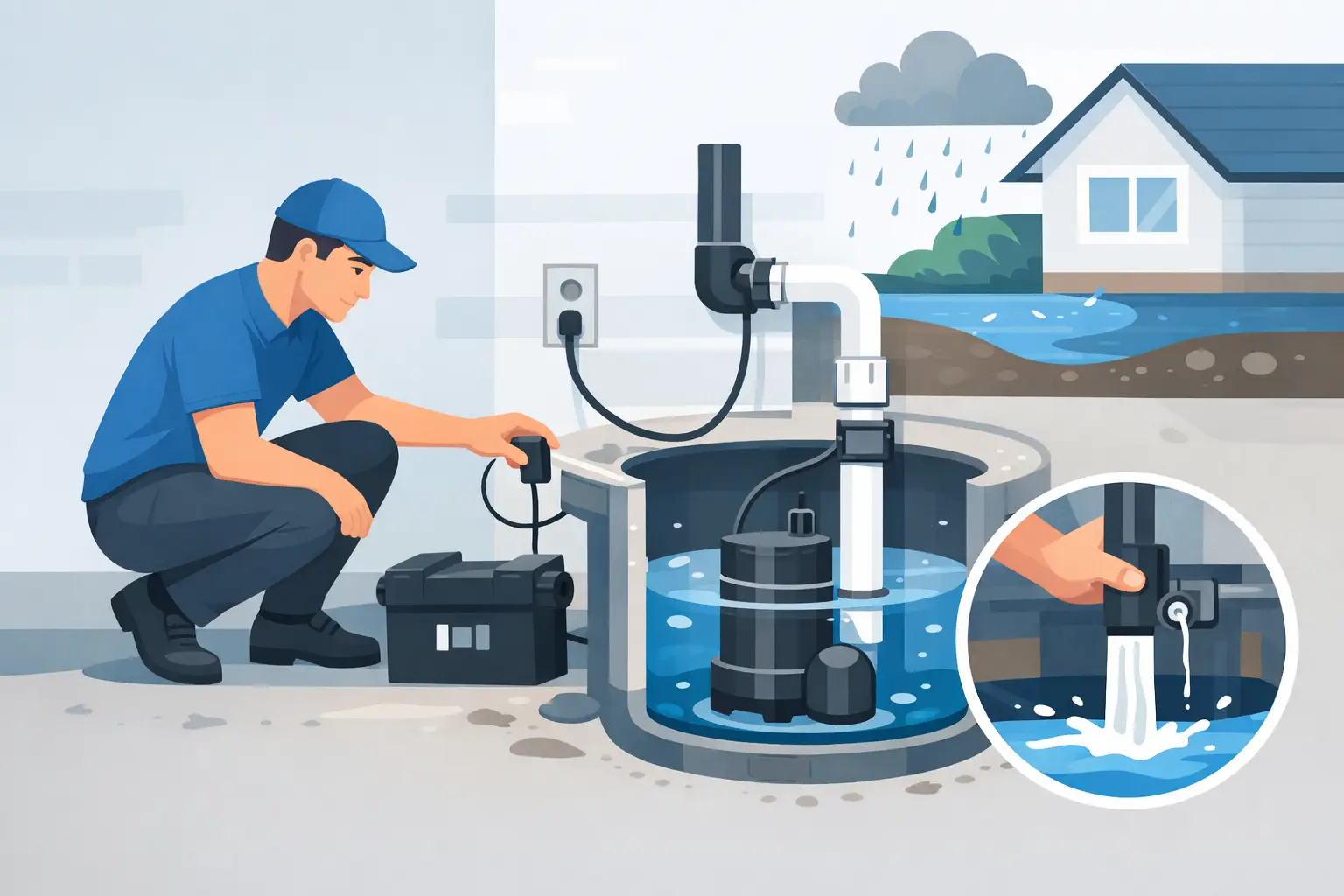
Remove the sump pit cover if your system has one and shine a flashlight into the basin. Look for mud, gravel, leaves, or other debris that could interfere with the pump or float switch. The float is the component that tells the pump to turn on as water rises. It must be able to move freely without catching on the pump, basin wall, cord, or discharge pipe.
Check that the pump is sitting upright and stable at the bottom of the pit. A tilted pump can cause the float to bind or allow sediment to enter the intake. Also inspect the power cord and outlet. The pump should be connected directly to a properly functioning outlet, preferably one protected by a ground-fault circuit interrupter. Avoid extension cords, which can create reliability and safety issues.
Confirm the discharge path is open
Follow the discharge pipe as far as you can safely see. The pipe should carry water away from the home, not dump it next to the foundation where it can flow back toward the basin. Look for loose connections, obvious cracks, crushed sections, or debris around the exterior discharge point.
If your system has a check valve on the discharge pipe, it should allow water to move out while preventing it from draining back into the pit. A failed check valve can make the pump work harder, cause repeated cycling, and leave more water in the basin than it should.
Add water slowly to the basin
The most reliable basic test is to pour water into the sump pit using a bucket or garden hose. Add enough water to raise the float and activate the pump. Do not run the pump dry, as many pumps rely on surrounding water to help prevent overheating.
As the water rises, the pump should start automatically. You should hear the motor engage and see the water level begin to drop. Depending on the pump size and basin depth, the water may disappear quickly. Once the float drops to its shutoff level, the pump should turn off.
Stay nearby for the entire test. If the water level rises but the pump does not activate, unplug the unit only if it is safe to do so and avoid repeatedly trying to force it on. The issue may be a failed float switch, motor, outlet, or electrical connection.
Watch what happens after the pump runs
A pump turning on is a good sign, but it is not the full test. Watch for strong water movement out of the pit and listen for unusual noises such as grinding, loud rattling, humming without pumping, or repeated clicking. These can point to a worn motor, a jammed impeller, loose components, or a blockage.
After the pump stops, note whether a large amount of water rushes back into the basin. Some water may return from the pipe, but a noticeable backflow can indicate a check valve problem. If the pump turns on and off every few seconds, the float may be set incorrectly, the check valve may be failing, or the system may be undersized for the water entering the pit.
Signs Your Sump Pump Needs Professional Service
Not every issue calls for replacement. Sometimes a professional cleaning, float adjustment, discharge repair, or check valve replacement restores dependable operation. Still, a pump that shows certain warning signs should be inspected before the next major rainfall.
Call for service if the pump will not start during a water test, runs but does not remove water, trips the breaker, makes loud mechanical noises, or has visible corrosion or damaged wiring. You should also schedule an inspection if the pump runs constantly when conditions are dry, cycles too frequently, or leaves standing water in the basin.
A musty smell near the sump pit, water stains around the area, or moisture in a crawl space can also signal that the system is not keeping up. These symptoms do not always mean the pump itself has failed. Drainage conditions, a clogged discharge line, or groundwater entering from an unexpected area may be part of the problem.
Do Not Forget the Backup Plan
A standard sump pump depends on electricity. During a storm, a power outage can happen at the same time your property needs the pump most. That is why many homeowners and property managers consider a battery backup sump pump, a water-powered backup where appropriate, or a standby generator connection.
The right choice depends on how often the basin fills, how long outages typically last, and how much damage a flooding event could cause. A backup system is not a substitute for maintaining the primary pump. Both units need periodic testing, and batteries need inspection and replacement according to the manufacturer’s guidance.
If your system has an alarm, test that as well. A high-water alarm can provide early warning that the pump has failed or cannot keep up. For rental homes, commercial spaces, and properties that may sit vacant, an alarm can offer valuable time to respond before water reaches finished areas.
How Often Should You Test a Sump Pump?
For most properties, testing every three to four months is a practical schedule. In Central Florida, it is wise to add a test before the rainy season and before a named storm or extended period of heavy rain. Properties with a history of groundwater issues, frequent pump cycling, or a finished basement or crawl space may need more frequent attention.
A yearly professional inspection is a sensible option when the pump protects a high-risk area or serves a multi-unit property. During an inspection, a plumber can evaluate the pump’s condition, switch performance, discharge setup, check valve, pit condition, and backup protection. This is also a chance to determine whether the current pump is properly sized for the property.
When a Fast Repair Matters
A sump pump that fails its test should not be put off until the forecast changes. Water problems tend to become urgent at the worst possible time, and a small repair is often far easier to manage before a storm arrives.
The Flush Club provides reliable sump pump service for Central Florida homeowners and property managers, with clear inspections, upfront estimates, and 24/7 emergency support when water cannot wait. A working sump pump is not something you should have to think about during a storm – test it now, address any warning signs early, and give your property a better chance of staying dry.