A toilet that runs for a few extra seconds is easy to ignore. A damp spot near the base, a slow drip onto the floor, or a rising water bill is not. Toilet leaks can quietly waste hundreds of gallons of water, damage flooring and subflooring, and create the kind of hidden moisture problem that becomes expensive when left alone.
The good news is that many toilet leaks have identifiable causes. The right response depends on where the water is coming from, whether the leak is active, and whether wastewater may be involved. Knowing the difference helps you protect your property and call for professional help before a small repair becomes water damage.
Start by Finding Where the Water Is Coming From
Not every puddle around a toilet means the same thing. Before assuming the toilet itself is leaking, dry the area thoroughly with towels and avoid flushing until you can observe where new water appears. Condensation on a tank can also create moisture, especially in humid Central Florida bathrooms, but it should not be confused with a plumbing leak.
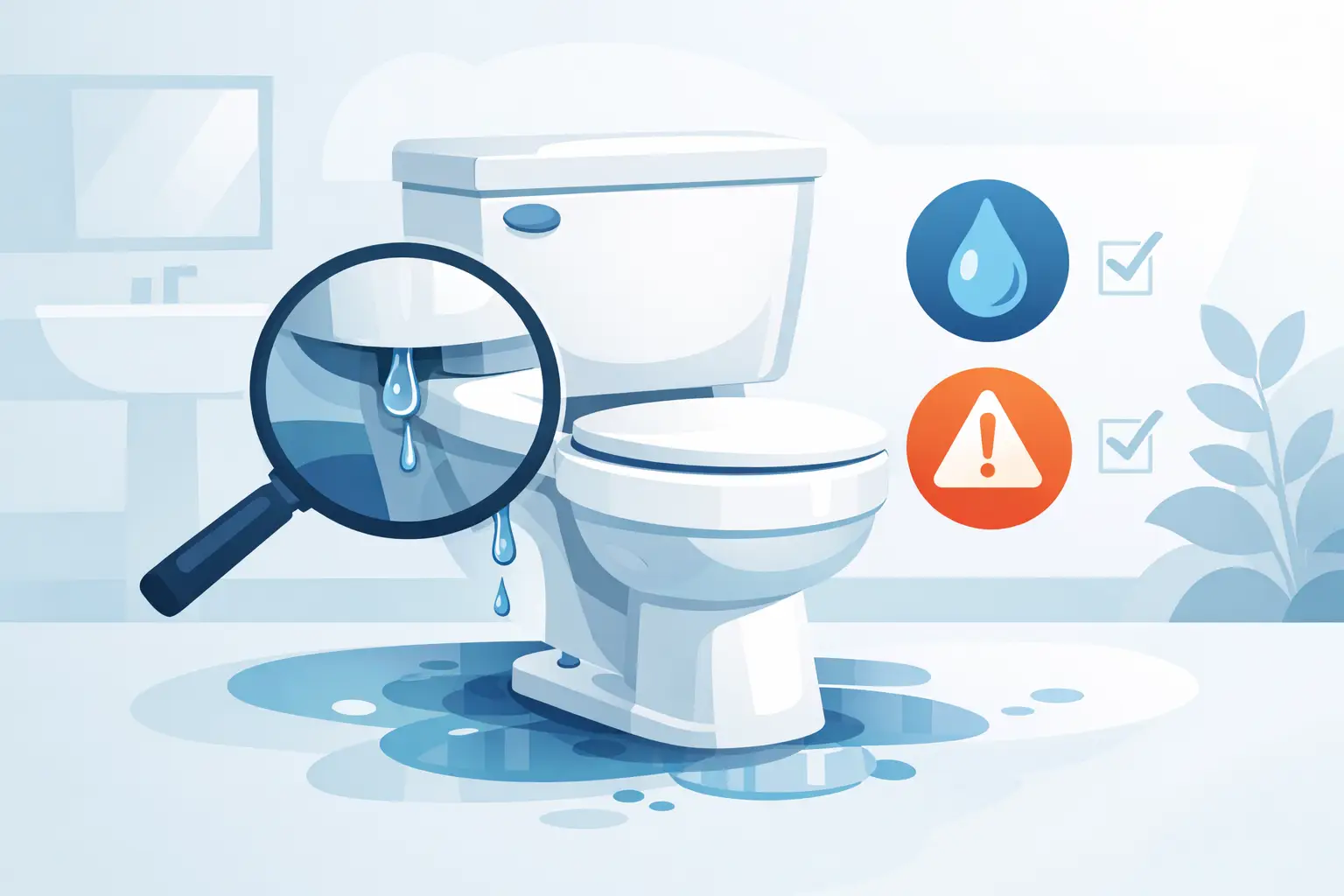
Water on the floor behind the toilet often points to the supply line, shutoff valve, or tank connections. Water appearing beneath the tank may come from worn tank bolts, a failing tank-to-bowl gasket, or a cracked tank. If moisture appears at the base after a flush, the issue may be the wax ring or toilet flange beneath the fixture.
A leak inside the toilet tank can be harder to see. You may hear the toilet refill at random times, notice a faint hissing sound, or see water moving in the bowl when no one has flushed. That is usually a running toilet, and it can waste a surprising amount of water every day.
Common Toilet Leaks and What They Usually Mean
Water leaking from the supply line or shutoff valve
The small water line running from the wall or floor to the bottom of the toilet tank is under constant pressure. A loose connection, corroded valve, worn washer, or aging braided supply line can allow water to drip slowly or spray suddenly.
If you see active dripping at this connection, turn the shutoff valve clockwise to stop the water. Do not force an old valve that feels seized, as it can break. A plumber can replace the line or valve and check for corrosion that may affect nearby components.
A leak between the tank and bowl
Two common points of failure are the rubber gasket between the tank and bowl and the bolts that hold the tank in place. Over time, rubber parts harden and metal hardware can rust. The leak may only appear when the toilet is flushed because that is when the tank releases water into the bowl.
It may be tempting to tighten the tank bolts until the dripping stops. That approach can work in limited cases, but overtightening porcelain can crack the tank. If the bolts are corroded, the gasket is worn, or the tank moves when touched, replacing the hardware and seals is the more reliable repair.
Water leaking at the toilet base
Water around the base after flushing is a warning sign worth taking seriously. In many cases, the wax ring under the toilet is no longer sealing correctly. The wax ring creates a watertight connection between the toilet and the drain pipe. When it fails, water can escape under the fixture instead of moving fully into the sewer line.
A loose toilet, damaged flange, uneven floor, or past installation issue can all contribute. Because this leak may involve wastewater and can soak into flooring before it becomes visible, avoid using the toilet until it is inspected. Caulking around the base may hide the evidence, but it will not repair the failed seal underneath.
A toilet that runs when nobody uses it
A running toilet is one of the most common hidden toilet leaks. The usual cause is a flapper that no longer seals at the bottom of the tank. Water slowly escapes into the bowl, the fill valve senses the drop, and the tank refills. A faulty fill valve, incorrect float setting, or mineral buildup can also be responsible.
You can perform a simple check by adding a few drops of food coloring to the tank water and waiting about 15 minutes without flushing. If color reaches the bowl, water is leaking past the flapper. Replacing a flapper is often straightforward, but matching the correct part and adjusting the chain properly matters. If the toilet still runs after a replacement, the problem may be the flush valve seat or fill assembly.
A cracked bowl or tank
Hairline cracks in porcelain can be difficult to spot, particularly near the base of a tank or underneath the bowl. A crack may start as occasional moisture and grow over time. Temperature changes, impact, excessive tightening, or age can contribute.
A cracked toilet is usually not a good candidate for a long-term patch. Epoxy may temporarily slow a minor external seep, but it does not restore the strength of the fixture. If the crack is allowing water out or affects the bowl, tank, or mounting area, replacement is typically the safest solution.
What to Do When You Notice a Toilet Leak
Fast action limits damage, but the best first step is not always the same. If water is actively flowing onto the floor, shut off the toilet’s supply valve if you can do so safely. If the toilet is overflowing and the valve will not stop it, remove the tank lid and lift the float or flapper to stop more water from entering the bowl. Then avoid flushing again.
For a suspected base leak, place towels around the toilet, keep people and pets away from the wet area, and use another bathroom if available. If the water is dirty, has an odor, or came from an overflow, treat it as contaminated. Clean-up may require more than surface drying, especially if water reached baseboards, flooring seams, or the ceiling below.
A toilet that simply runs without water on the floor is less urgent, but it should still be addressed promptly. The longer it runs, the more water it wastes and the more likely it is that a worn internal component will fail completely.
When a Toilet Leak Needs Emergency Plumbing Help
Some toilet problems can wait for a scheduled repair. Others should be handled right away to protect your home, rental property, or business.
Call for prompt plumbing service when water will not stop after the shutoff valve is closed, the toilet is overflowing, water is leaking through a ceiling, or the flooring near the fixture feels soft or swollen. A sewage smell, repeated backups, or water emerging around the base can also indicate a drain or sewer issue beyond the toilet itself.
Property managers and business owners should move quickly even with a small active leak. One toilet out of service can affect tenants, employees, customers, and daily operations. Fast diagnosis also helps document the condition before moisture spreads into adjacent units or common areas.
For Central Florida homeowners and property managers, The Flush Club can inspect the source of the leak, explain the repair options clearly, and provide an upfront estimate before work begins. The goal is not to apply a temporary fix that leaves hidden damage or a recurring leak behind.
Preventing Future Toilet Leaks
Most toilet leaks are related to aging seals, hardware, supply lines, or movement at the base. A quick visual check every few months can catch trouble early. Look for rust around tank bolts, moisture on the supply line, discoloration at the base, a toilet that rocks, or unexplained refill sounds.
Avoid using chemical drain cleaners in a toilet, as they can damage internal parts and create risks during later repairs. Do not use the toilet as a step stool or storage surface, and address a loose toilet before it puts extra stress on the flange and wax ring. If your water bill rises without a clear reason, check toilets first – silent running leaks are a common cause.
A dry bathroom floor, a stable toilet, and a quiet tank are good signs. If any of those changes, acting early is usually the simplest way to keep a minor toilet repair from turning into a flooring, ceiling, or sewer problem.