A water heater rarely fails at a convenient time. One day the shower runs cold, the utility room floor is wet, or a tenant calls because there is no hot water before work. Knowing how to choose a water heater before that moment gives you more control over the cost, installation timeline, and long-term performance of your system.
For Central Florida homes and properties, the right choice is not always the biggest tank or the model with the lowest purchase price. Your household demand, available fuel, electrical capacity, installation space, water quality, and budget all matter. A professional assessment can confirm the details, but these are the decisions that should guide the conversation.
Start With Your Hot Water Demand
The most common water heater mistake is choosing a unit based only on the size of the old one. That heater may have been undersized from the start, or your household may have changed since it was installed. A family with two adults has very different needs than a home with four people, multiple bathrooms, a large soaking tub, and back-to-back morning showers.
For a traditional storage-tank heater, capacity is measured in gallons. Many smaller homes do well with a 40- or 50-gallon tank, while larger households often need 50 to 80 gallons or more. But tank size alone does not tell the full story. Look at the First Hour Rating, which estimates how many gallons of hot water a heater can provide during a busy hour of use. This is especially useful when several people shower, run the dishwasher, or do laundry around the same time.
Tankless water heaters are measured by flow rate in gallons per minute. They heat water as it passes through the unit, so the key question is how many fixtures may run at once. A shower, dishwasher, and washing machine can create a demand that exceeds an undersized tankless unit, leading to reduced flow or lukewarm water.
Think About Peak Use, Not Average Use
A household may use a moderate amount of hot water over a full day but still need a high-performing system for one hour every morning. Consider your busiest period: How many showers run? Does anyone use a large tub? Are laundry and dishes often running at the same time? For rental properties and small commercial spaces, factor in occupancy changes and customer or employee use rather than relying on a quiet day’s demand.
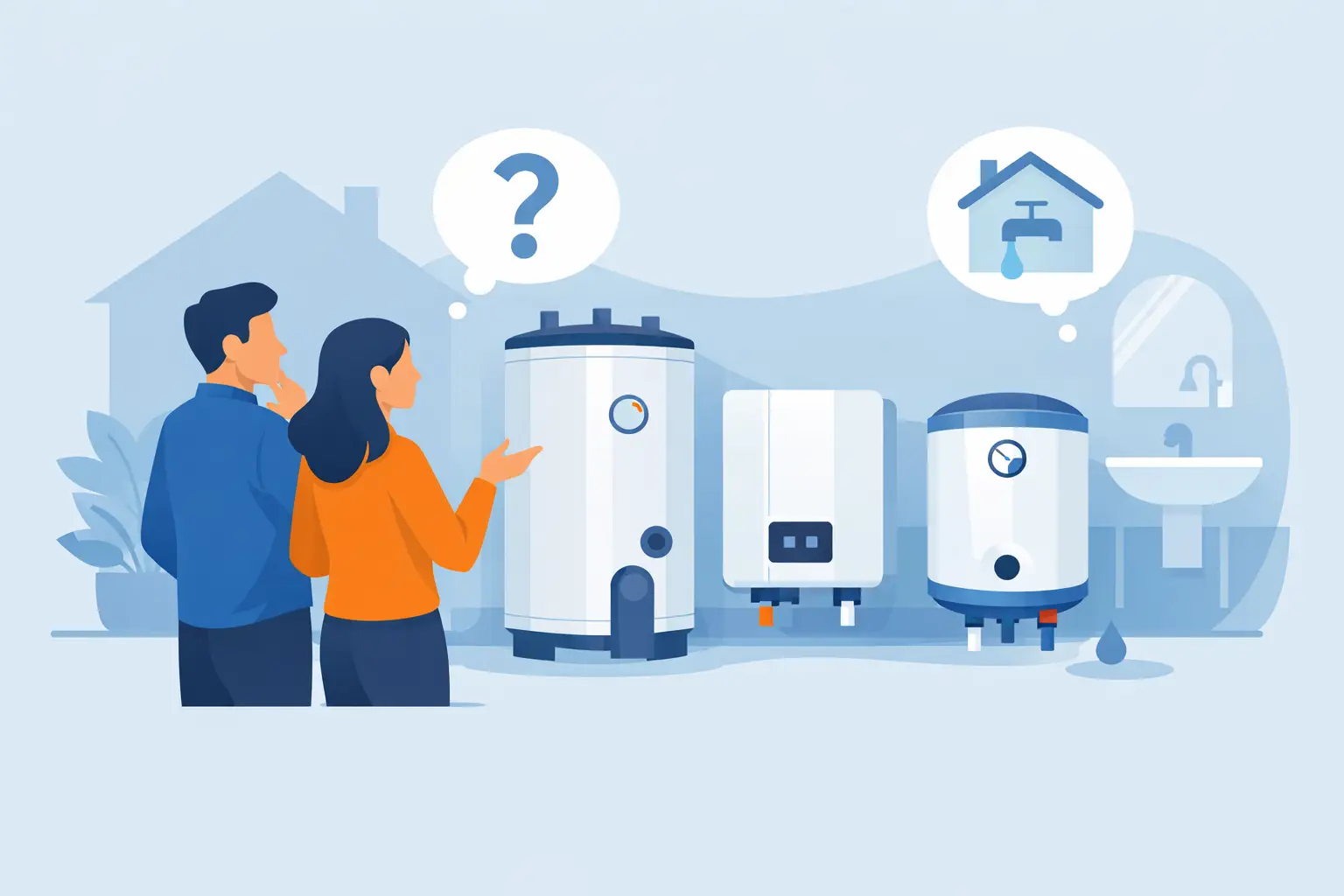
Choose Between Tank, Tankless, and Heat Pump Models
There is no single best water heater for every property. Each type has benefits and trade-offs.
A conventional tank water heater stores a supply of heated water and is familiar, dependable, and generally less expensive to install than a tankless model. It is often a practical choice when you need a straightforward replacement, have limited budget flexibility, or want to use existing connections with minimal changes. The trade-off is standby heat loss: the system uses energy to keep stored water hot even when no one is using it.
A tankless water heater heats water only when a fixture calls for it. It can provide a continuous supply when it is properly sized, takes up less space, and may offer lower energy use over time. However, installation can cost more. A gas tankless unit may require gas-line upgrades, dedicated venting, and condensate drainage. An electric tankless unit may require major electrical upgrades because of its high power demand.
Heat pump water heaters use electricity to move heat from surrounding air into the tank rather than generating all heat directly. In Central Florida’s warm climate, that can make them an efficient option. They need adequate space and airflow, and they can cool and dehumidify the room where they are installed. That can be useful in a garage but less appealing in a small interior closet. Their upfront cost is typically higher, and installation planning matters.
Match the Fuel Source to Your Property
Before selecting a model, identify what your current system uses: electricity, natural gas, propane, or sometimes another fuel source. Staying with the existing fuel type is often the simplest path, but it is not always the best long-term decision.
Electric tank heaters are widely available and can be practical for homes without gas service. Gas models often recover hot water faster, which can help larger households, but they need proper combustion air, venting, and gas connections. Converting from electric to gas, or vice versa, is more involved than swapping one appliance for another. The work may require upgrades that change the total project cost significantly.
For homes on well water, water quality also deserves attention. Mineral buildup can shorten equipment life and reduce heating performance. Filtration, water softening, or scheduled flushing may be part of protecting your investment, depending on the water conditions at the property.
How to Choose a Water Heater With the Right Efficiency
Efficiency should be evaluated over the life of the equipment, not just at checkout. A lower-priced unit may cost more to operate every month, while a higher-efficiency model may reduce energy use but take longer to pay back. The best fit depends on how much hot water you use, local utility rates, how long you expect to stay in the property, and the cost of needed upgrades.
Compare the Uniform Energy Factor, or UEF, when looking at similar water heater types and sizes. A higher rating generally means better energy performance. It is most useful when comparing models that serve the same purpose. A highly efficient heater that cannot keep up with your household is not a good value.
Also consider recovery rate for tank models and flow rate at your incoming groundwater temperature for tankless systems. Florida groundwater is generally warmer than in colder regions, which can help tankless performance, but the unit still must meet the property’s actual simultaneous demand.
Plan for Space, Safety, and Installation Requirements
A water heater is not a plug-and-play appliance. The installation has to meet the property’s layout, utility connections, safety requirements, and applicable code.
Measure the available space, including clearance needed for service and replacement. A tank heater may need a drain pan and a properly routed drain line, particularly when installed in an attic, closet, or area where a leak could damage ceilings or floors. Tankless units may free up floor space, but they still need room for service access, venting, and required connections.
Pay attention to these installation details before selecting a model:
- Electrical requirements, including dedicated circuits and panel capacity
- Gas-pipe sizing, shutoff access, and safe venting for gas equipment
- Drainage for temperature and pressure relief valves, pans, or condensate
- Location rules for garages, closets, attics, and commercial utility areas
Permits and inspections may be required for replacement or upgrade work. That process protects the property and helps ensure the new water heater is installed safely and correctly rather than creating a hidden problem behind a wall or above a ceiling.
Set a Budget That Includes the Full Job
The price on the equipment is only one part of a water heater replacement. Your total budget should account for removal and disposal of the old unit, installation labor, code-required components, permits where applicable, and any utility upgrades discovered during inspection.
A like-for-like tank replacement is usually the most predictable option. Moving to tankless, switching fuel sources, relocating the heater, or correcting outdated venting and drainage can add cost. Those changes may still be worthwhile, particularly for a long-term home or a property with repeated hot-water complaints, but they should be explained clearly before work begins.
Ask for an itemized estimate and make sure you understand what is included. A reliable plumbing contractor should explain the recommended capacity, why the chosen type fits your demand, what installation changes are needed, and what warranty coverage applies to both equipment and workmanship.
Know When Replacement Makes More Sense Than Repair
If your water heater is leaking from the tank itself, replacement is generally the right move. A leaking connection, valve, or drain component may be repairable, but corrosion through the tank is not a lasting repair situation. Rust-colored water, inconsistent temperature, frequent repairs, unusual noises, and an aging unit are also reasons to evaluate replacement rather than continuing to spend on short-term fixes.
Age matters, but condition matters too. Many tank water heaters last roughly eight to 12 years, depending on maintenance, water quality, use, and installation conditions. Tankless systems can last longer when properly maintained, though they still need periodic service to control scale buildup and keep components operating reliably.
A professional inspection helps separate a repairable issue from a system nearing the end of its service life. That is particularly valuable for landlords and property managers who need to avoid repeat calls and disruption for occupants.
Make the Decision Before It Becomes an Emergency
The best time to select a water heater is while your current one still works. You can compare options, verify measurements, plan upgrades, and choose a system that fits your property instead of accepting whatever is available during an emergency replacement.
If your heater is aging, leaking, making new noises, or failing to keep up, schedule an inspection early. The Flush Club can assess your existing system, explain your options in plain language, and provide a clear estimate before installation begins. A properly sized, professionally installed water heater should make hot water the last thing you have to think about.