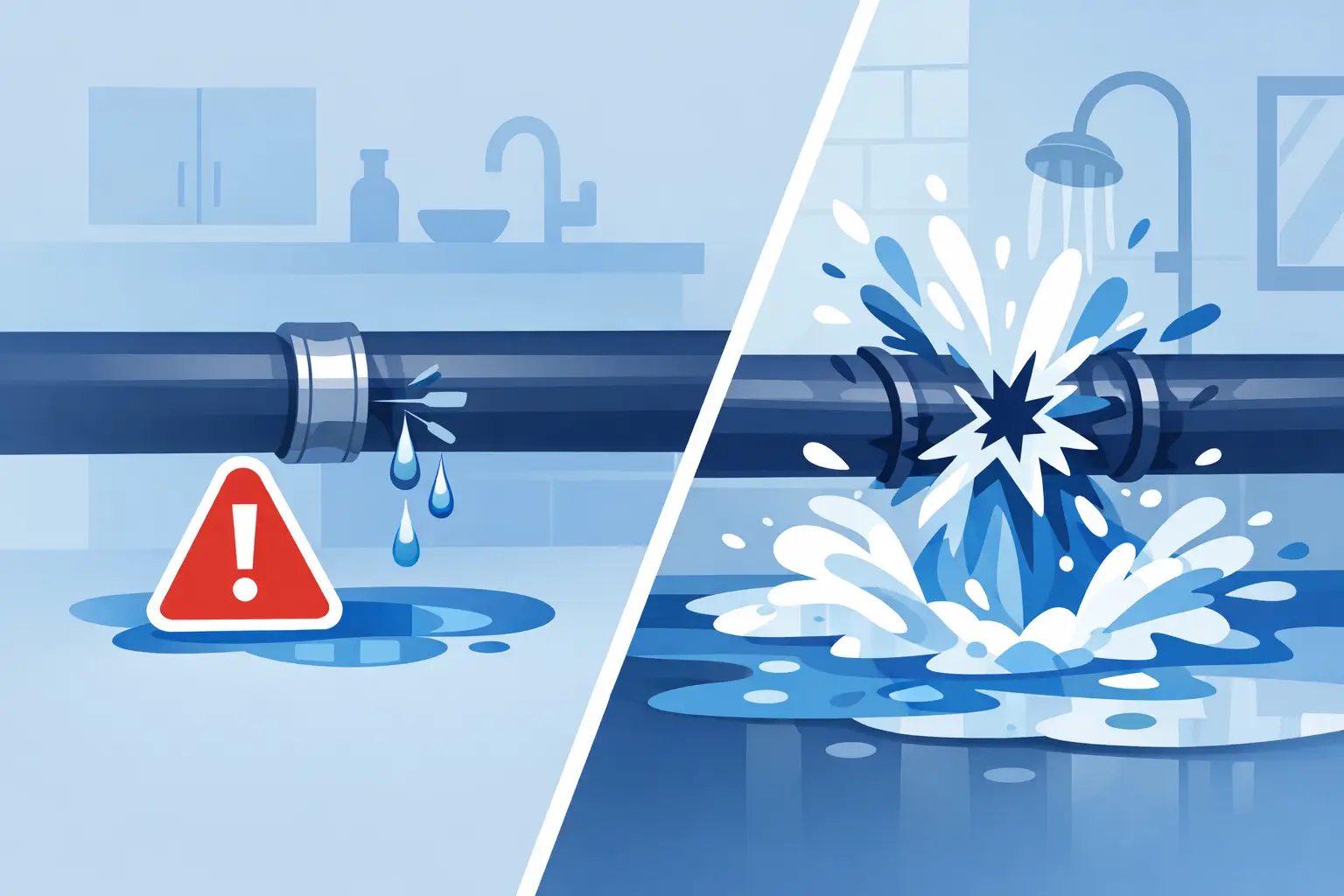
A slow drip under a sink can feel like a problem for another day. But can a leaking pipe burst? Yes. A leak often means the pipe, fitting, or connection has already weakened, and the same pressure that pushes water through your plumbing can turn that weak point into a larger failure.
Not every leaking pipe will suddenly rupture. Some leaks remain small for a long time, especially at a loose fixture connection. Others can worsen quickly because of corrosion, high water pressure, movement in the pipe, or damage hidden behind a wall. The safest approach is to treat an active leak as a repair issue now, not after it damages flooring, drywall, inventory, or electrical systems.
Can a Leaking Pipe Burst? What Makes It Happen
A pipe bursts when its material or connection can no longer contain water pressure. The visible leak is sometimes the early warning. Water may be escaping through a pinhole in a corroded pipe, a split in plastic piping, a failed joint, or a cracked fitting. As the weak area expands, water flow increases and the pipe may open further.
Water pressure plays a major role. Residential plumbing is designed to operate within a normal pressure range, but excessive pressure puts added stress on every pipe, valve, appliance hose, and connection. If a pipe is already worn or damaged, high pressure can speed up its failure.
Age and pipe material matter, too. Older galvanized steel pipes can corrode from the inside, creating thin walls that eventually develop leaks. Copper may develop pinhole leaks from corrosion or water chemistry. PVC and CPVC can become brittle with age, heat exposure, improper installation, or physical impact. Even newer piping can fail if a fitting was not installed correctly or if the pipe has been repeatedly strained.
In Central Florida, freezing temperatures are less common than in colder states, but they can still occur during a hard cold snap. Water expands as it freezes, which can split unprotected pipes in garages, exterior walls, crawl spaces, and outdoor plumbing. A pipe that was already leaking or weakened is especially vulnerable.
Warning Signs a Small Leak May Become a Bigger Failure
A leaking pipe does not always announce itself with a steady stream of water. Many serious plumbing failures begin out of sight. Pay attention to changes in your property, particularly if the water bill rises without a clear reason.
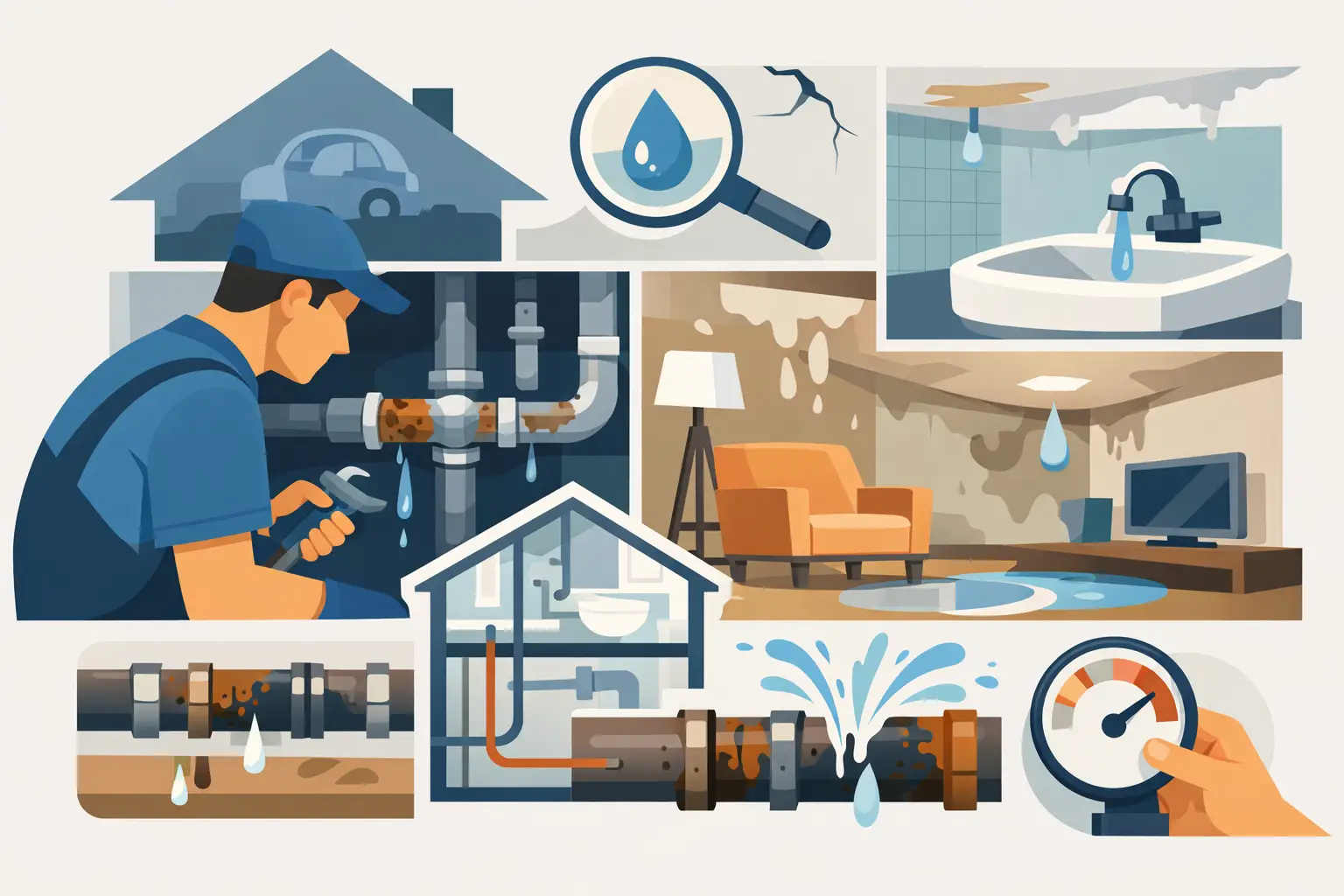
Common warning signs include a damp or discolored spot on a wall or ceiling, peeling paint, warped flooring, a musty odor, low water pressure at one fixture, or the sound of water moving when no fixtures are running. You may also notice water pooling near a water heater, beneath a sink, around a toilet, or near an exterior wall.
A leak that suddenly gets louder, spreads across a larger area, or produces a noticeable drop in pressure deserves prompt attention. So does a pipe that appears rusty, greenish, cracked, bulging, or heavily stained around its joints. These are not cosmetic issues. They can indicate that the pipe or connection is deteriorating.
For commercial properties and rental units, small leaks deserve even faster action. Water can travel through walls and ceilings before it becomes visible, affecting multiple suites, units, or shared building systems. A quick repair is usually less disruptive than waiting for a pipe to fail during business hours or when a tenant is away.
Why Leaks Can Get Worse So Quickly
Water follows the path of least resistance. Once it finds a weak point, it can gradually erode surrounding material, enlarge a hole, and damage pipe supports. A leak at a threaded connection can also worsen as the fitting shifts or as corrosion builds around the joint.
Water hammer is another concern. This is the banging or thudding sound that can happen when water flow stops suddenly, such as when a washing machine valve closes. Repeated pressure shocks can strain pipes and fittings over time. A plumbing professional can identify whether pressure regulation, pipe support, or water hammer arrestors may help protect the system.
A hidden leak can also create secondary problems long before a full burst occurs. Moisture may lead to mold growth, rotted framing, damaged insulation, ruined cabinetry, and electrical hazards. In many cases, the damage around the pipe costs more to repair than the plumbing issue itself.
What to Do When You Find a Leaking Pipe
First, determine whether the leak is minor and contained or actively spreading. If water is spraying, pooling quickly, coming through a ceiling, or near electrical outlets or appliances, shut off the main water supply if it is safe to do so. Every property owner or manager should know where the main shutoff valve is located before an emergency happens.
For a leak under a sink, you may be able to use the fixture shutoff valves to stop water to that specific faucet or toilet. Place a bucket or towels beneath the leak to limit water damage, but do not rely on towels as a repair. Avoid using tape, putty, or clamps as a long-term solution. They may slow a drip temporarily, yet they do not address corrosion, a failed fitting, or excessive pressure.
If water is near electrical equipment, do not step into standing water or touch electrical devices. Turn off power to the affected area only if you can do so without approaching the water. Contact emergency plumbing help and, if needed, an electrician or restoration professional.
Take a photo of the affected area after the water is controlled. This can help document the issue for a property manager, landlord, insurer, or repair professional. Then arrange a professional inspection as soon as possible. The goal is not only to stop the visible leak but also to identify why it started.
When a Leak Is an Emergency
A dripping supply line may allow time for a scheduled repair, provided you can isolate the fixture and there is no active property damage. A burst pipe, ceiling leak, slab leak symptoms, sewer line backup, or uncontrolled water flow is different. Those situations require immediate action.
Call for emergency plumbing service when water cannot be shut off at the fixture, water is entering walls or ceilings, pressure suddenly drops throughout the building, or a pipe has visibly split. The same applies when a leak affects a water heater, main water line, commercial restroom, or any area where customers, tenants, or employees could be exposed to slipping or electrical hazards.
Fast response limits damage, but the repair should still be thorough. A professional should inspect the surrounding pipe, fittings, water pressure, and any conditions that may cause another failure nearby. Replacing one failed section may be enough. In an older system with widespread corrosion or recurring leaks, targeted repiping or a larger pipe replacement may be the more reliable and cost-effective choice.
Preventing Future Pipe Failures
The best prevention is catching problems early. Check exposed plumbing periodically, especially beneath sinks, around toilets, near water heaters, and at outdoor spigots. Look for moisture, corrosion, stains, or changes in water pressure. Address slow drains and recurring clogs as well, since backups can add stress to plumbing systems and reveal larger drain or sewer concerns.
A professional plumbing inspection is particularly worthwhile if your property has aging pipes, recurring leaks, unusually high water bills, discolored water, or inconsistent pressure. Testing water pressure can reveal a system-wide issue that is quietly stressing fixtures and pipes. For properties with older plumbing, a clear assessment helps you plan repairs before an emergency forces a rushed decision.
The Flush Club provides fast, professional plumbing support for Central Florida homeowners, property managers, and businesses when a leak needs attention. After an inspection, you should receive a clear explanation of the issue, the recommended repair, and upfront pricing before work begins.
A leaking pipe is not always on the verge of bursting, but it is always a signal that your plumbing needs attention. Shut off the water when necessary, protect the area from further damage, and have the cause repaired before a manageable leak becomes an expensive interruption.