You step onto the floor and it feels oddly warm. Or your water bill jumps for no clear reason. Those small changes are often how to tell if you have a slab leak before the problem turns into major water damage.
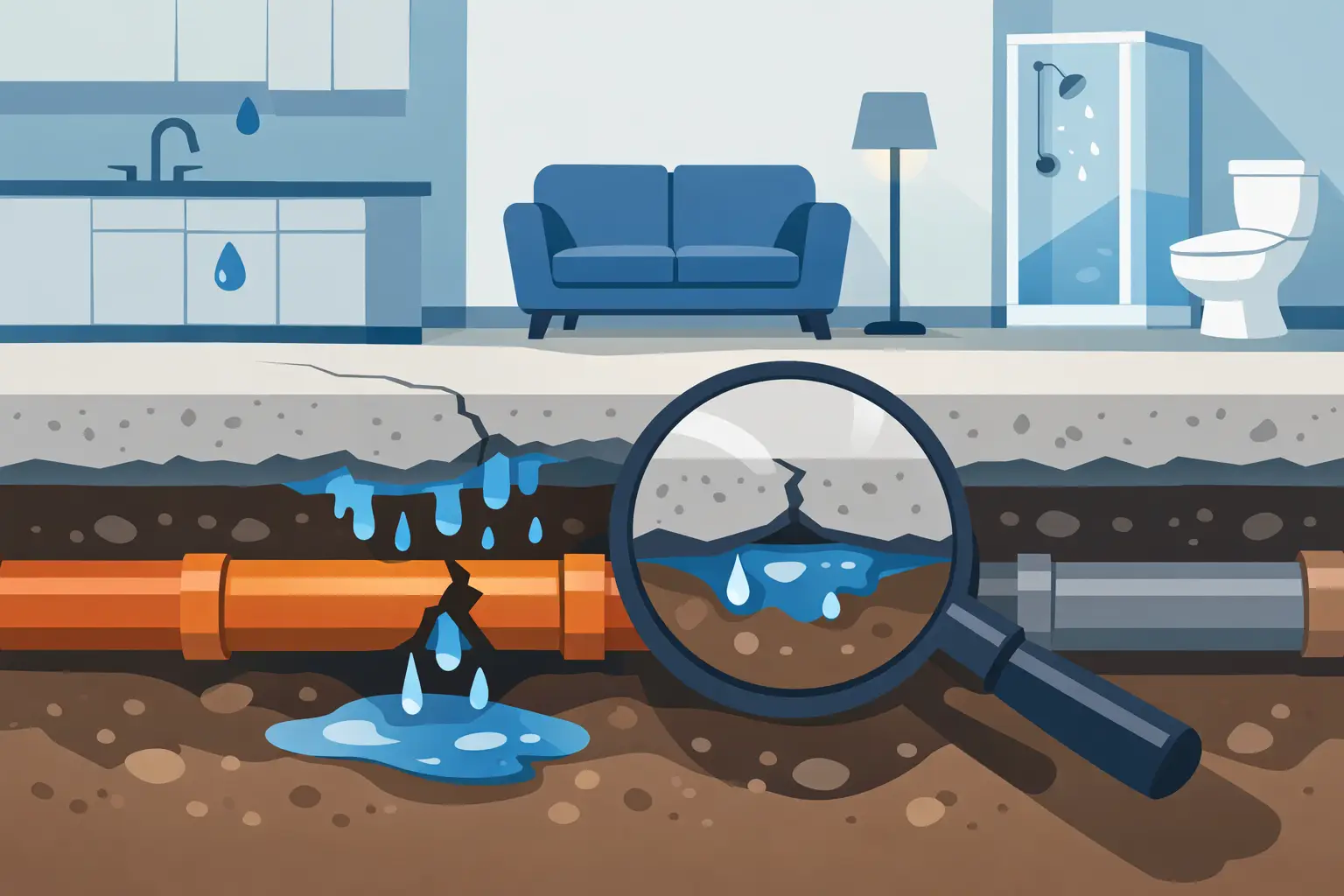
A slab leak happens when a water line running beneath your home’s concrete foundation develops a leak. Because the pipe is hidden under the slab, the warning signs are easy to miss at first. By the time the issue becomes obvious, you could be dealing with damaged flooring, mold, foundation movement, or a much higher repair cost.
For homeowners and property managers in Central Florida, quick action matters. Moisture spreads fast, and our climate does not do wet building materials any favors.
What is a slab leak?
A slab leak is a leak in the plumbing lines located under the concrete slab foundation of a home or commercial building. These lines may carry hot water, cold water, or in some cases drain water. When one of them cracks, corrodes, or shifts out of place, water escapes below the structure instead of where you can see it.
Some slab leaks stay small for a while. Others become urgent fast. It depends on the pipe material, water pressure, soil conditions, and whether the leak is on a pressurized line.
How to tell if you have a slab leak
The clearest clue is a combination of small warning signs that do not seem connected at first. On their own, a single symptom might point to something else. Together, they often tell a more serious story.
Your water bill suddenly increases
If your water use has not changed but your bill has, hidden leakage is one of the first things to consider. A slab leak on a pressurized supply line can waste a surprising amount of water every day. Even a pinhole leak adds up over time.
A higher bill does not automatically mean a slab leak. Running toilets, irrigation leaks, and dripping fixtures can also cause it. But if you have already ruled those out, the slab becomes a more likely suspect.
You hear water running when everything is off
When no faucets, showers, appliances, or irrigation zones are in use, your plumbing system should be quiet. If you hear a faint rushing or hissing sound in the wall or floor, that can mean water is moving where it should not be.
This is especially worth paying attention to at night when the house is quiet. If the sound seems constant, do not ignore it.
Warm or damp spots appear on the floor
One of the more noticeable signs is a section of flooring that feels warmer than the rest, especially with a hot water line leak. You may also notice damp carpet, warped wood, loose tile, or spots that stay wet without an obvious spill.
Warm spots do not always mean danger, and not every slab leak creates one. But if the same area keeps drawing your attention, it deserves a professional inspection.
There is a musty smell you cannot track down
Water trapped under flooring or inside building materials often creates a stale, damp odor. If a room smells musty even after cleaning and ventilation, hidden moisture could be the reason.
That smell is not just unpleasant. It can also signal conditions that support mold growth.
Cracks begin to show in floors or walls
A long-term slab leak can affect the soil beneath the foundation. As moisture levels change, the slab may shift slightly. That movement can show up as hairline cracks in flooring, walls, baseboards, or ceiling areas nearby.
Not every crack points to a slab leak. Homes settle for many reasons. The concern rises when cracks appear along with high water bills, moisture, or unexplained sounds.
Water pressure drops for no clear reason
A damaged underground water line can reduce the pressure reaching your faucets and fixtures. If pressure suddenly feels weaker throughout the property, and not just at one fixture, a hidden leak may be part of the problem.
Pressure issues can also come from valve problems, pipe buildup, or municipal supply changes. This is one of those signs where the full picture matters.
Mold or mildew appears without an obvious source
If mold shows up on flooring, trim, or lower wall areas where no visible leak exists, moisture may be traveling upward from below the slab. This is especially concerning in humid areas, where excess moisture can spread quickly and become harder to control.
A simple check you can do before calling
If you want a basic way to spot hidden water loss, check your water meter. Turn off all faucets, appliances that use water, and irrigation. Then look at the meter and wait 15 to 30 minutes without using any water.
If the meter changes during that time, water may be escaping somewhere in the system. That does not confirm a slab leak by itself, but it tells you there is a leak worth investigating.
If you are responsible for a commercial property or a multi-unit building, this test can be less straightforward because of shared systems and ongoing water use. In that case, a professional inspection is usually the faster path.
What causes slab leaks?
Slab leaks do not happen for one single reason. In many homes, it is a combination of age, material wear, and environmental conditions.
Pipe corrosion is a common cause, especially in older plumbing systems. Water chemistry can slowly wear down copper or metal lines over time. Abrasion is another issue. As water flows through a pipe, the line may expand and contract slightly. If it rubs against concrete, gravel, or other hard surfaces, weak points can develop.
Foundation shifting can also place stress on underground pipes. In Florida, changing moisture conditions in the soil can affect how the ground supports the slab. Poor installation, high water pressure, and accidental damage during past work can contribute too.
Why fast diagnosis matters
A slab leak is not the kind of problem that improves with time. The trade-off with waiting is simple: a leak that seems minor today can lead to a much larger repair tomorrow.
Ongoing moisture can damage flooring, baseboards, drywall, and cabinetry. It can create conditions for mold. In more serious cases, water affects the soil under the slab enough to contribute to settlement or cracking. For landlords and business owners, there is also the added issue of tenant disruption, downtime, or possible liability if the leak creates unsafe conditions.
The good news is that early detection often gives you more repair options and less collateral damage.
How plumbers confirm a slab leak
If you are wondering how to tell if you have a slab leak with certainty, the answer is professional leak detection. Surface symptoms are useful, but they are not enough to pinpoint the exact location or cause.
A licensed plumber may use pressure testing, acoustic listening equipment, thermal imaging, or other non-invasive tools to identify where the leak is happening. That matters because the best repair depends on more than just finding water. It depends on pipe condition, leak location, accessibility, and whether the issue is isolated or part of a bigger piping problem.
In some cases, a spot repair makes sense. In others, rerouting the line or replacing a section of pipe is the smarter long-term solution. It really depends on the age of the system and the risk of future failures.
What to do if you suspect a slab leak
If several of these signs are showing up at once, do not wait for visible flooding. Start by limiting water use if possible. If you see active moisture, protect nearby flooring, furniture, and valuables. Then schedule a plumbing inspection as soon as you can.
If the leak seems severe, such as rapidly increasing water, major pressure loss, or clear floor saturation, shutting off the home’s main water supply may help reduce damage until a plumber arrives.
For Central Florida property owners, choosing a company that can respond quickly and explain the repair options clearly makes a real difference. You want a licensed team that can inspect the problem, confirm the source, and give you a straightforward estimate before work begins. That is exactly the kind of practical, no-surprise service The Flush Club is built around.
When your home starts giving off quiet warning signs, trust them. Catching a slab leak early can protect your floors, your foundation, and your peace of mind.