A white crust around faucets, stiff laundry, and spots on clean glasses usually point to hard water. A chlorine smell, metallic taste, or concern about what is in your drinking water points to a different issue. The water softener versus filtration decision is not really about choosing the “better” system. It is about identifying what is in your water and selecting equipment that addresses that specific problem.
For Central Florida homeowners, landlords, and property managers, that distinction can prevent wasted money and disappointing results. A softener and a filter may look similar from the outside, but they do very different jobs. In many properties, especially those on private wells, the right answer may be using both.
What a Water Softener Does
A water softener is designed to remove hardness minerals, primarily calcium and magnesium. Those minerals are not usually a health concern, but they can create expensive plumbing and appliance problems over time.
When hard water is heated or evaporates, it leaves mineral scale behind. You may see it on shower doors and fixtures, but it also builds inside water heaters, dishwasher components, washing machines, pipes, and ice makers. That buildup can reduce efficiency, restrict water flow, and shorten the life of equipment that depends on clean water pathways.
Most traditional water softeners use an ion-exchange process. Water passes through resin beads that capture calcium and magnesium. The system periodically regenerates using salt, flushing the collected minerals away and restoring the resin for continued use.
A properly sized softener can make a noticeable difference throughout the home. Soap lathers more easily, towels may feel softer, spotting can decrease, and fixtures are easier to keep clean. It can also help protect water-using appliances from the steady effects of scale.
Signs You May Need a Softener
Hard water is often visible before it is confirmed by a test. Common signs include recurring white or chalky residue, dry-feeling skin after bathing, dull laundry, soap scum that returns quickly, and reduced performance from a tank-style water heater or dishwasher.
Still, appearances do not tell the whole story. Water hardness should be tested before choosing a system. A home with moderate hardness may need a different solution than a large household with very hard water, several bathrooms, and high daily water use.
What a Water Filtration System Does
Filtration is a broad category. Depending on the type of system and media used, a filter can reduce sediment, chlorine, unpleasant tastes and odors, iron, sulfur, certain contaminants, or other water-quality concerns.
Unlike a softener, a filtration system is not automatically intended to remove hardness minerals. A carbon filter, for example, can improve the taste and smell of municipally supplied water by reducing chlorine and related compounds. It will not necessarily stop scale from forming on a showerhead.
Filtration can be installed at different points in a property. A whole-home system treats water as it enters the building, helping protect fixtures and improving water quality at every tap. A point-of-use system, often installed under a kitchen sink, focuses on water used for drinking and cooking.
The right filtration method depends on the water source and test results. City water and well water can require very different treatment plans. A home on a well may need sediment filtration, iron or sulfur treatment, and disinfection considerations before a softener is even evaluated. A home served by a municipal system may primarily benefit from chlorine reduction and drinking-water filtration.
Water Softener Versus Filtration: The Key Difference
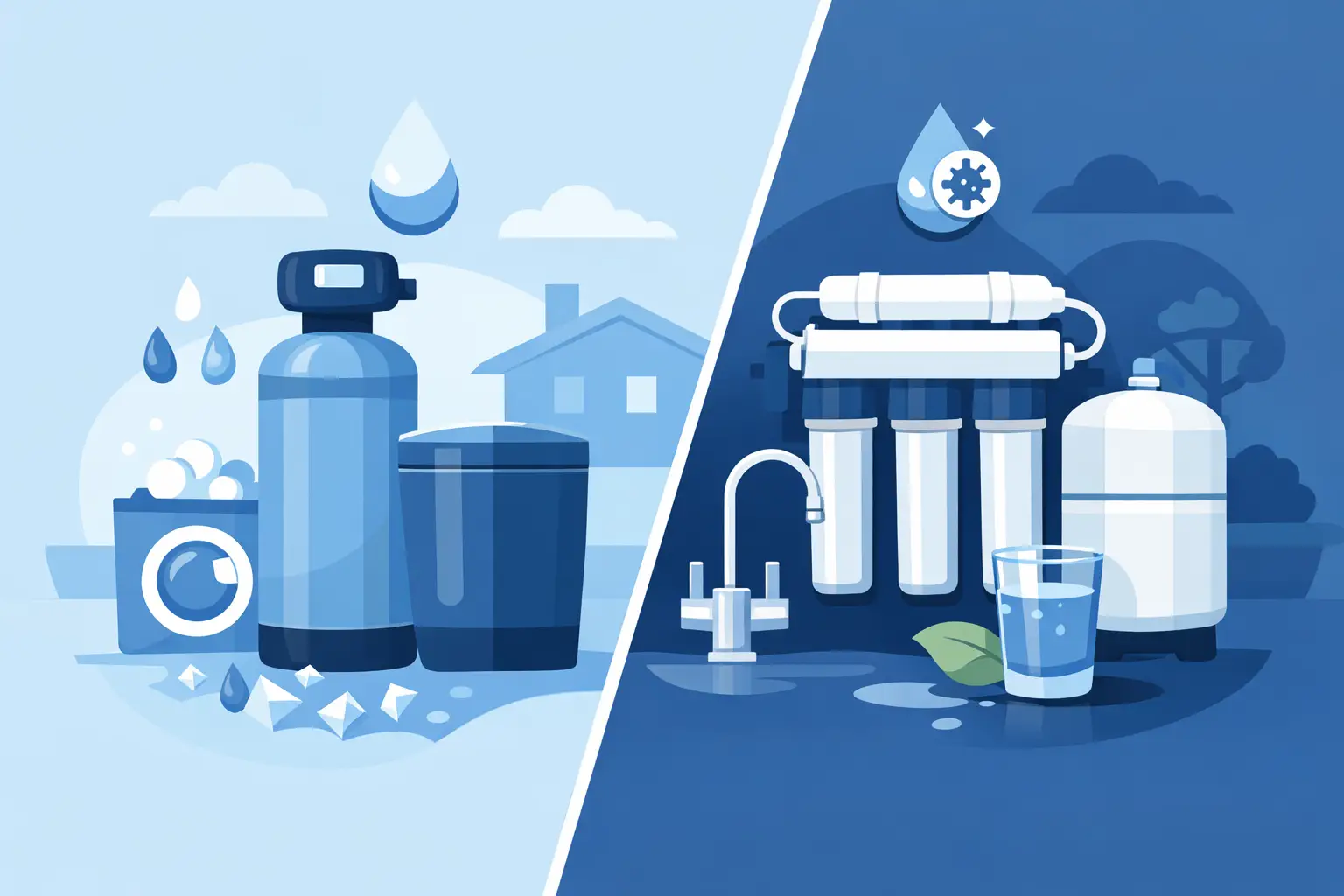
The simplest way to compare water softener versus filtration systems is this: a softener targets minerals that cause hardness, while a filter targets unwanted particles, chemicals, tastes, odors, or specific contaminants.
A softener is usually the better fit when scale, soap scum, and appliance protection are your main concerns. A filtration system is usually the better fit when your concern is the quality, odor, clarity, or taste of the water itself.
Neither system should be expected to do the other system’s job unless it is specifically engineered to do so. Products marketed as salt-free “softeners,” for example, may help condition water or reduce how scale adheres to surfaces, but they typically do not remove hardness minerals in the same way as an ion-exchange softener. That can be a reasonable trade-off for some households, but it should be clearly understood before installation.
When a Home Needs Both
Many Central Florida properties benefit from a combined approach. This is especially common where hard water exists alongside chlorine, sediment, iron, sulfur odors, or other water-quality issues.
A common whole-home setup may include a sediment prefilter, treatment equipment for a specific concern such as iron, a water softener, and a carbon filter. The order matters. For example, sediment and iron can foul softener resin, so addressing those issues first may help the softener perform reliably and last longer.
A combined system can improve daily comfort while protecting plumbing equipment and improving drinking water. But more equipment is not always better. Every component needs to match the property’s water conditions, plumbing layout, water demand, maintenance capacity, and budget. Installing treatment equipment without a proper assessment can lead to poor pressure, unnecessary service needs, or equipment that does not solve the original problem.
Choosing the Right System for Your Property
Start with a water test, not a guess. For municipal water, review the symptoms you are seeing and consider testing for hardness, chlorine, and any concerns related to taste, odor, or appearance. For private wells, comprehensive testing is especially important because well water quality can vary by location, depth, seasonal conditions, and nearby environmental factors.
Next, consider how the property uses water. A family home with multiple bathrooms, a rental with frequent tenant turnover, or a small business with high-volume water use needs equipment sized for its actual flow rate and daily demand. A system that is too small may struggle during peak use. A system that is too large can cost more upfront and may regenerate or operate inefficiently.
Maintenance should also be part of the decision. Salt-based softeners require salt refills and periodic checks. Filters need cartridge changes or media replacement based on water conditions and usage. A trustworthy installer should explain these requirements clearly, along with expected costs, before work begins.
Questions Worth Asking Before Installation
Ask what the system is designed to remove, how it was sized, and whether the recommendation is based on test results. You should also know where the equipment will be installed, whether it affects water pressure, how often it needs service, and what happens if a component fails.
For property managers and business owners, access and downtime matter too. Treatment equipment should be installed where it can be serviced safely without disrupting tenants, staff, or customers. Clear shutoff options and properly planned bypass valves can make future maintenance far less disruptive.
Protecting Your Plumbing Starts With Accurate Diagnosis
Water treatment should solve a real problem, not create a new one. If your faucets are coated in scale, a drinking-water filter alone may leave the underlying hard-water issue untouched. If your water smells like sulfur or contains sediment, adding a standard softener may not provide the result you expect.
The Flush Club can help Central Florida property owners evaluate water concerns, understand their treatment options, and install systems built around the needs of the property. The goal is straightforward: clear answers, professional workmanship, and a solution that supports your plumbing for the long term.
If you are unsure what your water needs, save a sample of the symptoms you notice – a photo of scale buildup, details about odor, or when pressure changes occur – and bring those observations to a professional assessment. They can help turn a frustrating water problem into a practical plan.