Running out of hot water halfway through a shower usually starts the same conversation: tankless vs tank water heater – which one actually makes more sense for your home or building? The right answer depends on how much hot water you use, how your plumbing is set up, and whether you care more about lower upfront cost or longer-term efficiency.
For Central Florida property owners, this decision is not just about features on a brochure. It affects utility bills, installation scope, recovery time, maintenance needs, and how well your system keeps up during busy mornings or tenant turnover. A water heater should match the property, not just the latest trend.
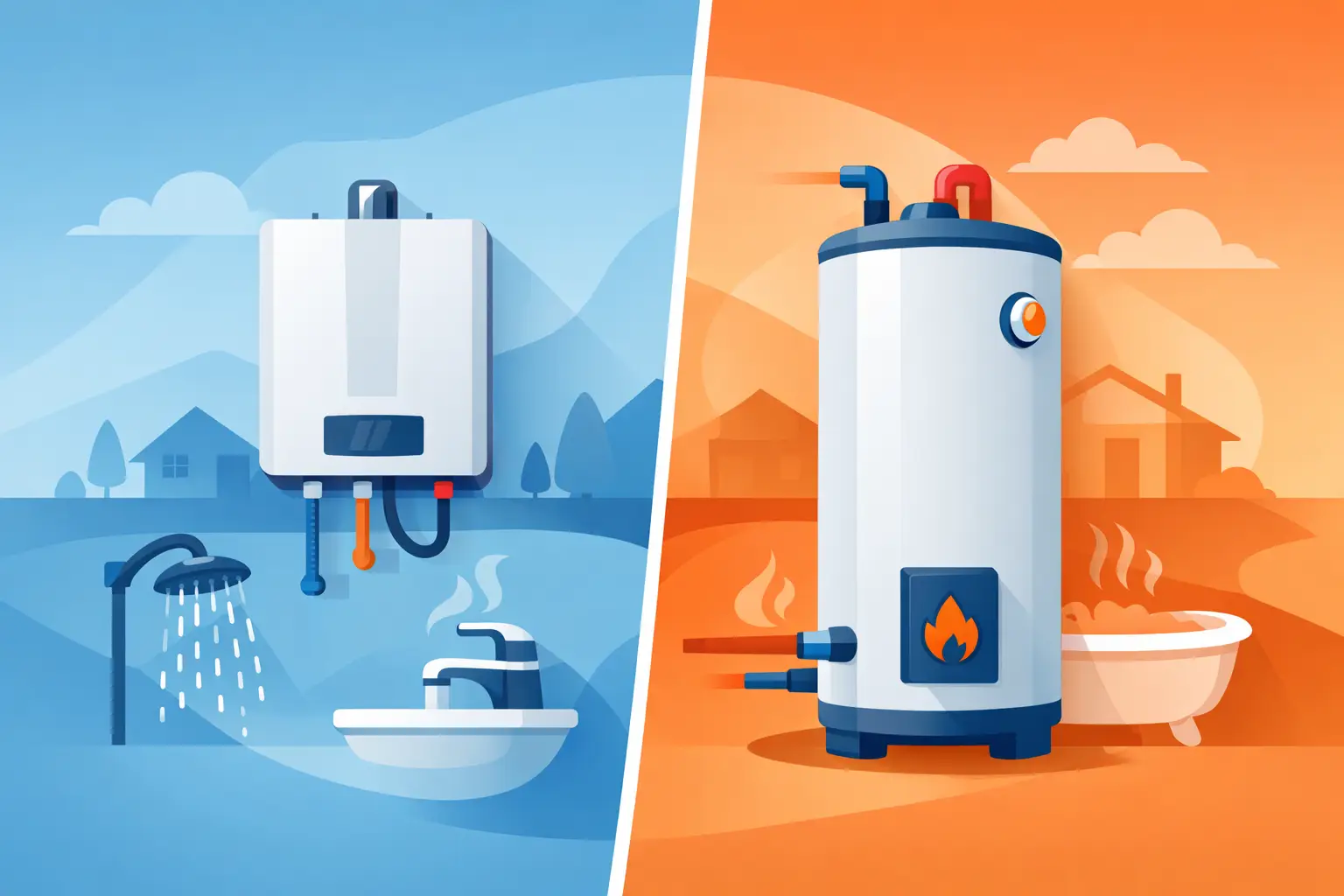
Tankless vs tank water heater: the basic difference
A traditional tank water heater stores a set amount of hot water, usually 40 to 80 gallons, and keeps it heated until you need it. When the tank empties, you wait for it to recover and heat more water.
A tankless water heater heats water on demand. Instead of storing hot water, it activates when a faucet, shower, or appliance calls for it. That means no standby heating of a full tank all day, but it also means the unit has to be properly sized to keep up with real-time demand.
On paper, tankless sounds like the obvious winner. In real homes and commercial spaces, it is more nuanced than that.
Upfront cost vs long-term value
If budget is the main driver, a standard tank water heater usually wins. The equipment cost is lower, installation is often simpler, and replacement can be straightforward when you are swapping one tank for another in the same location.
Tankless systems usually cost more upfront. The unit itself is more expensive, and installation can involve added work such as gas line upgrades, venting changes, electrical adjustments, or rerouting plumbing. In some properties, that added scope is minor. In others, it changes the project cost in a big way.
That higher entry cost is why tankless is not automatically the best fit for every homeowner or landlord. The long-term value can be strong, especially if you plan to stay in the property for years and want better efficiency. But if you need a reliable replacement now and want to keep costs controlled, a tank system may be the smarter move.
Performance in real-life use
Hot water demand is where the tankless vs tank water heater choice gets more practical.
A tank system can be great for predictable household use. If your family showers at different times and the heater is properly sized, a tank can provide dependable service without much thought. Problems usually show up when multiple people use hot water back to back, or when appliances and showers overlap. Once the stored hot water is gone, recovery takes time.
A tankless system can provide continuous hot water, which is a major advantage for larger households or properties with heavy use. But there is a catch: continuous does not mean unlimited at any flow rate. If several fixtures are running at once, the unit still has a maximum output. An undersized tankless unit can struggle during peak demand, especially in homes with multiple bathrooms.
That is why sizing matters so much. A tankless system that is matched correctly to the property can perform very well. A system chosen by sticker price alone can leave people frustrated.
Energy efficiency and operating costs
Tankless units are generally more energy efficient because they heat water only when needed. Traditional tanks lose some energy through standby heat loss, since they keep stored water hot around the clock.
That said, actual savings depend on usage. In a household with moderate hot water use, tankless can lower energy costs over time. In properties with inconsistent occupancy, like some rentals or smaller commercial spaces, on-demand heating can be especially appealing.
But energy savings should be viewed realistically. They help offset the higher purchase and installation cost, not erase it overnight. If someone is choosing tankless purely to cut bills immediately, the payback period may be longer than expected.
Space, layout, and installation limits
Tankless systems take up less physical space. They mount on a wall and can free up room in a garage, utility area, or mechanical closet. For smaller properties or businesses where every square foot matters, that is a real benefit.
Tank units are bulkier, but that does not always make them a poor choice. If the property already has space for a tank and the existing setup is straightforward, replacing with a similar model may keep installation simpler and more affordable.
This is also where many property owners run into surprises. A tankless upgrade may require more than removing one heater and hanging another. Gas-fired units may need larger gas supply lines. Venting requirements can differ. Electric tankless systems can demand major electrical capacity. The property may support the upgrade easily, or it may need significant modifications.
A professional inspection matters here because the best system on paper may not be the most practical system for the building as it stands today.
Lifespan and maintenance expectations
Tankless water heaters often last longer than standard tank systems. A well-maintained tankless unit may last 15 to 20 years, while many tank water heaters fall closer to 8 to 12 years, depending on water quality, usage, and maintenance.
That longer lifespan is one of the strongest arguments for tankless. Over time, it can help justify the higher upfront investment.
Still, maintenance is part of the equation. Tankless units need regular service, especially in areas with hard water or mineral buildup. Flushing and descaling are important to keep performance up and prevent damage. Tank water heaters also benefit from maintenance, including flushing sediment from the tank, but many owners neglect it until a problem shows up.
Neither option is maintenance-free. The better choice is often the one you are more likely to maintain properly.
Which option works best for different properties?
For many single-family homes, a tank water heater remains a dependable and cost-effective solution. If the household size is modest, the plumbing layout is simple, and the goal is reliable hot water without a major installation project, a tank often checks the right boxes.
Tankless can be an excellent fit for larger families, homes with frequent hot water demand, or owners who want longer service life and better efficiency. It also makes sense when freeing up space is valuable or when the property is already well-suited for the necessary utility connections.
For landlords and property managers, the decision often comes down to budget, expected length of ownership, tenant use patterns, and replacement speed. A tank may be the practical choice when fast turnaround and controlled cost matter most. Tankless may be worth it in higher-end rentals or longer-term hold properties where efficiency and longevity support the investment.
For small businesses, usage patterns matter even more. A salon, restaurant, office, or retail space may have very different hot water needs. The right answer comes from demand calculations, not guesswork.
When tankless is the wrong move
Tankless is not the right answer if the property cannot support it without expensive upgrades, if hot water demand exceeds what a single properly sized unit can handle cost-effectively, or if the budget priority is immediate replacement at the lowest practical cost.
It can also disappoint owners who expect instant hot water at every fixture. Tankless provides on-demand heating, but it does not eliminate the time it takes water to travel through pipes. That is a plumbing layout issue, not a water heater type issue.
When a tank heater is the wrong move
A traditional tank may be the wrong fit if your household regularly runs out of hot water, if utility efficiency is a high priority, or if the available installation space is limited. It can also be less appealing for owners planning to stay in the property long enough to benefit from a tankless system’s longer lifespan.
If your current complaint is not just age but performance during peak use, replacing an old tank with another undersized tank may solve one problem and keep another.
How to make the right choice
The best decision usually comes down to four questions: How much hot water do you use at once, what is your installation budget, how long do you expect to own the property, and what utility infrastructure is already in place?
If you want the lower upfront cost and a proven, dependable solution, a tank water heater often makes sense. If you want longer-term efficiency, space savings, and continuous hot water – and the property can support it – tankless may be the better investment.
A trusted plumbing inspection helps separate marketing claims from what will actually work in your home or commercial space. That is especially true when you want to avoid surprise upgrades, undersized equipment, or a replacement that solves today’s failure but not tomorrow’s demand.
If you are weighing tankless vs tank water heater options, the right answer is the one that gives you reliable hot water without stretching your budget or your system. Good plumbing decisions are not about buying the most advanced unit. They are about choosing the setup that will keep up with your property, your usage, and your day-to-day needs.