That steady drip usually starts as a minor annoyance. Then you notice water spots in the sink, a higher utility bill, or a cabinet floor that feels damp. If you’re asking, why is my faucet leaking, the good news is that the cause is often straightforward. The bigger question is whether it’s a quick fix or a sign of wear deeper in the fixture or plumbing line.
A leaking faucet is one of those problems that seems small until it keeps happening. In homes, rentals, and commercial spaces across Central Florida, faucet leaks often come down to worn parts, water pressure issues, corrosion, or loose connections. The trick is knowing which type of leak you have and what it may be telling you.
Why is my faucet leaking from the spout?
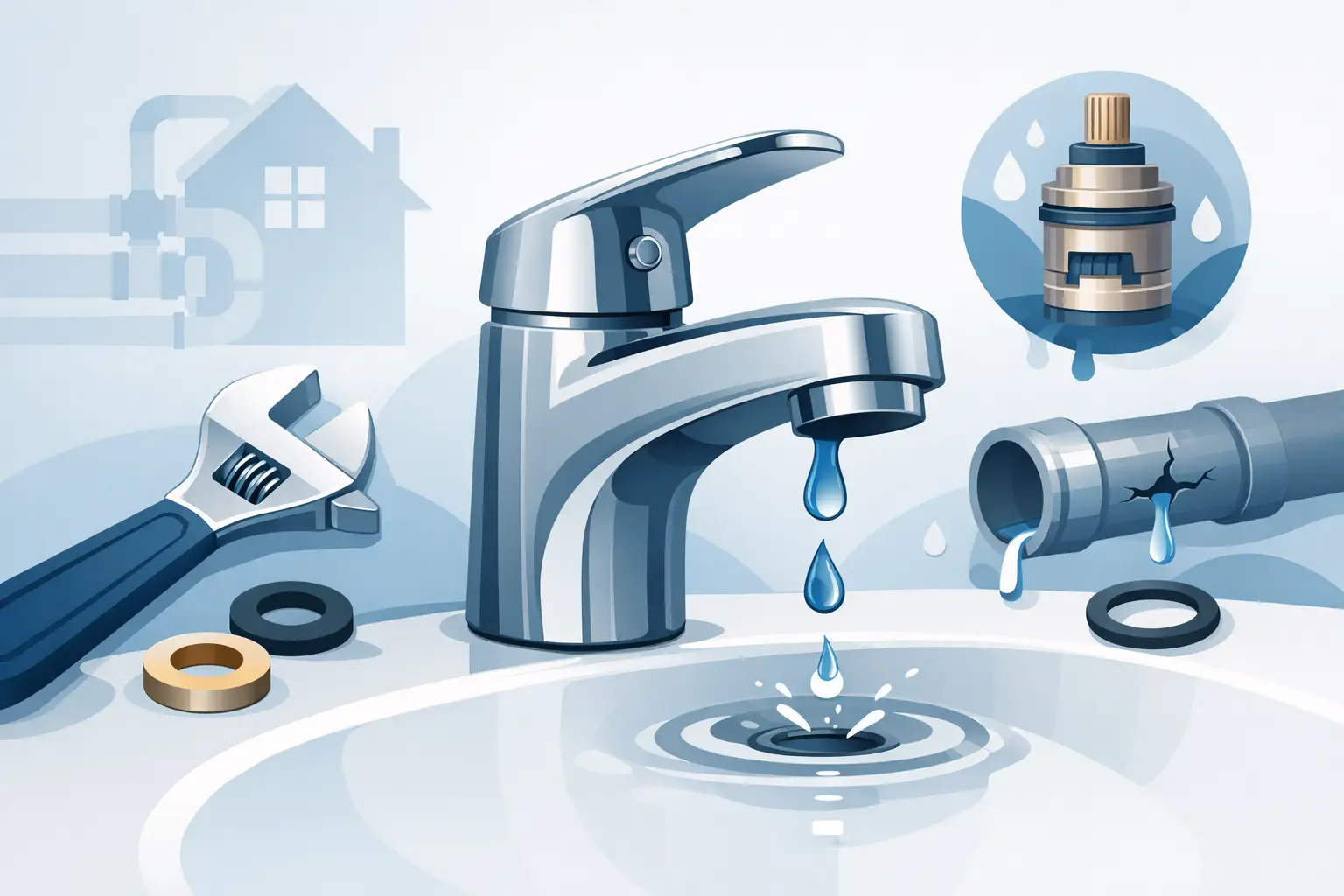
If water drips from the end of the faucet even when the handle is fully off, the issue is usually inside the faucet body. Most often, a component that controls water flow is no longer sealing the way it should.
In a compression faucet, that usually means a worn washer. These faucets rely on a rubber washer pressing down to stop water flow, and over time that washer hardens, cracks, or shifts out of place. In cartridge, ball, or ceramic disc faucets, the problem may be a damaged cartridge, worn seals, or mineral buildup interfering with the internal parts.
Age matters here. A faucet that has worked for years without issue can start leaking simply because daily use wears out small internal components. Hard water can speed that process up by leaving behind mineral deposits that keep seals from closing tightly.
Sometimes homeowners replace one small part and expect the leak to stop, but the faucet still drips. That usually means there is more than one worn component involved, or the fixture itself is near the end of its service life.
Why is my faucet leaking under the sink?
A leak under the sink points to a different category of problem. Instead of the faucet valve itself, the issue is often with the supply lines, shutoff valves, mounting hardware, or drain connections nearby.
Flexible supply lines can loosen at the connection points or develop wear over time. Compression fittings may drip if they were overtightened, undertightened, or disturbed during a previous repair. Shutoff valves can also leak around the packing nut or stem, especially in older plumbing systems.
There is also a common false alarm worth mentioning. Water under the sink is not always coming from the faucet supply. It may be coming from the drain, the P-trap, the garbage disposal, or even condensation. Drying the area completely and then checking while the faucet runs can help narrow down the source.
If the cabinet floor is swollen, stained, or has a musty smell, the leak may have been active for longer than expected. At that point, the plumbing fix is only part of the job. You may also be dealing with cabinet damage, mold risk, or weakened materials around the connections.
Why is my faucet leaking around the base?
When water pools around the bottom of the faucet, the problem is usually with seals or O-rings. These parts help keep water contained as it moves through the faucet body, and when they wear out, water can escape around the base instead of only through the spout.
This type of leak can be easy to miss because it often happens only while the faucet is running. Water may collect around the fixture and then slowly seep underneath the sink, making it look like two separate problems.
In some cases, the faucet base is loose, which allows movement that strains seals and connections. In others, grime and mineral buildup prevent a proper seal. If the faucet wiggles when you use it, that should not be ignored. Loose fixtures tend to create bigger leaks over time.
Common causes behind a leaking faucet
Most faucet leaks come back to a handful of issues. Worn washers, damaged cartridges, loose parts, failed O-rings, corroded valve seats, and mineral buildup are the most common. None of these are unusual, but the right fix depends on the faucet style and exactly where the water is escaping.
Water pressure can also play a role. If a faucet only leaks at certain times, especially overnight or during specific demand changes, the plumbing system may be experiencing pressure fluctuations. That does not automatically mean the faucet is defective. It may mean the faucet is reacting to stress elsewhere in the system.
Poor installation is another factor. A faucet that was installed with misaligned parts, weak connections, or low-quality components may start leaking much sooner than expected. This is especially common in rental turnovers, quick remodels, or DIY replacements where the fixture looked fine at first but did not hold up in daily use.
Then there is simple age. Even a good faucet does not last forever. If repairs are stacking up or the finish is deteriorating, replacement may make more sense than continuing to swap out individual parts.
What you can check before calling a plumber
If the leak is minor and easy to access, there are a few safe observations you can make first. Check whether the leak happens only when the faucet is on, only when it is off, or all the time. Look closely at the spout, handles, base, and under-sink supply connections. Dry everything thoroughly so you can see where fresh water first appears.
You can also note whether the faucet has one handle or two, and whether it is a kitchen, bathroom, utility, or commercial sink fixture. That helps narrow down the internal mechanism involved.
What you should not do is keep tightening parts aggressively. Overtightening supply nuts, handles, or mounting hardware can crack fittings, damage seals, or create a bigger leak. If the shutoff valves are old and stiff, forcing them can cause them to start leaking too.
For property managers and business owners, it is also worth checking how long the leak may have been active. A slow drip in a vacant unit or employee restroom can waste a surprising amount of water and lead to hidden damage before anyone notices.
When a leaking faucet is not a DIY job
Some faucet repairs are straightforward. Others are not worth the guesswork. If the fixture is leaking from multiple points, if the shutoff valves do not work properly, if corrosion has frozen parts in place, or if there is water damage under the sink, it is smarter to have it diagnosed correctly the first time.
The same goes for recurring leaks. If you have already replaced a washer or tightened a connection and the leak came back, the root cause may be deeper than the visible symptom. There may be valve damage, pressure issues, or deterioration in the fixture body itself.
For commercial properties, speed matters even more. A leaking faucet in a break room, restroom, or tenant space affects water usage, appearance, and sometimes daily operations. Fast repair limits disruption and helps prevent small plumbing issues from turning into maintenance complaints or larger service calls.
In Central Florida, mineral content and humidity can make faucet problems a little more stubborn. Parts wear down faster, moisture lingers longer in cabinets and walls, and corrosion can complicate repairs that would otherwise be simple.
Repair or replace?
It depends on the faucet’s age, quality, and condition. If the faucet is relatively new and the leak is tied to one serviceable part, repair is often the right call. If the fixture is older, heavily corroded, loose at the base, or has multiple issues at once, replacement may be more cost-effective.
There is also a reliability question. A low-cost faucet that has already started leaking may not be worth repeated repairs. A better-quality replacement can save time, reduce water waste, and give you a longer-lasting result.
That is why a clear inspection matters. A dependable plumber should be able to tell you what failed, what it will take to fix it, and whether the repair is likely to hold or just buy a little time. At The Flush Club, that practical approach is what helps customers make the right call without pressure or guesswork.
If you are wondering why is my faucet leaking, treat the drip as useful information, not just an irritation. Faucets usually leak for a reason, and catching that reason early is the best way to avoid wasted water, cabinet damage, and a more expensive repair later.