That constant hissing sound is more than annoying. If you are searching for how to stop toilet running, you are usually dealing with a toilet that keeps refilling, wastes water around the clock, and may be pointing to a worn part inside the tank.
The good news is that many running toilet problems come down to a few common components. The better news is that you do not need to understand every detail of plumbing to figure out what is happening. In most homes and commercial restrooms, the issue is usually the flapper, fill valve, float, or chain. The challenge is knowing which one is causing the problem and whether a quick adjustment will hold or if a proper repair is the smarter move.
Why a toilet keeps running
A toilet runs when water continues moving from the tank into the bowl or when the tank never fully stops refilling. Under normal operation, the toilet flushes, the tank empties, the fill valve adds fresh water, and then everything shuts off once the water reaches the correct level.
When that cycle does not stop, one of two things is usually happening. Water is leaking out of the tank into the bowl, which forces the toilet to refill again and again, or the fill mechanism is not shutting off at the right water level. Both problems waste water, and over time they can add up to a surprisingly high utility bill.
How to stop toilet running: start with a quick tank check
Before replacing anything, remove the tank lid carefully and set it on a towel or stable surface. Flush the toilet once, then watch what happens inside as the tank refills.
If the water level rises too high and spills into the overflow tube, the fill valve or float likely needs adjustment or replacement. If the tank fills to the correct level but water still slips into the bowl, the flapper is usually the first suspect. If the chain is too tight or tangled, it may be preventing the flapper from sealing fully.
This quick visual check matters because it helps you avoid replacing the wrong part. Toilet repairs are usually straightforward, but guessing can turn a simple fix into repeated trips to the hardware store.
Check the flapper first
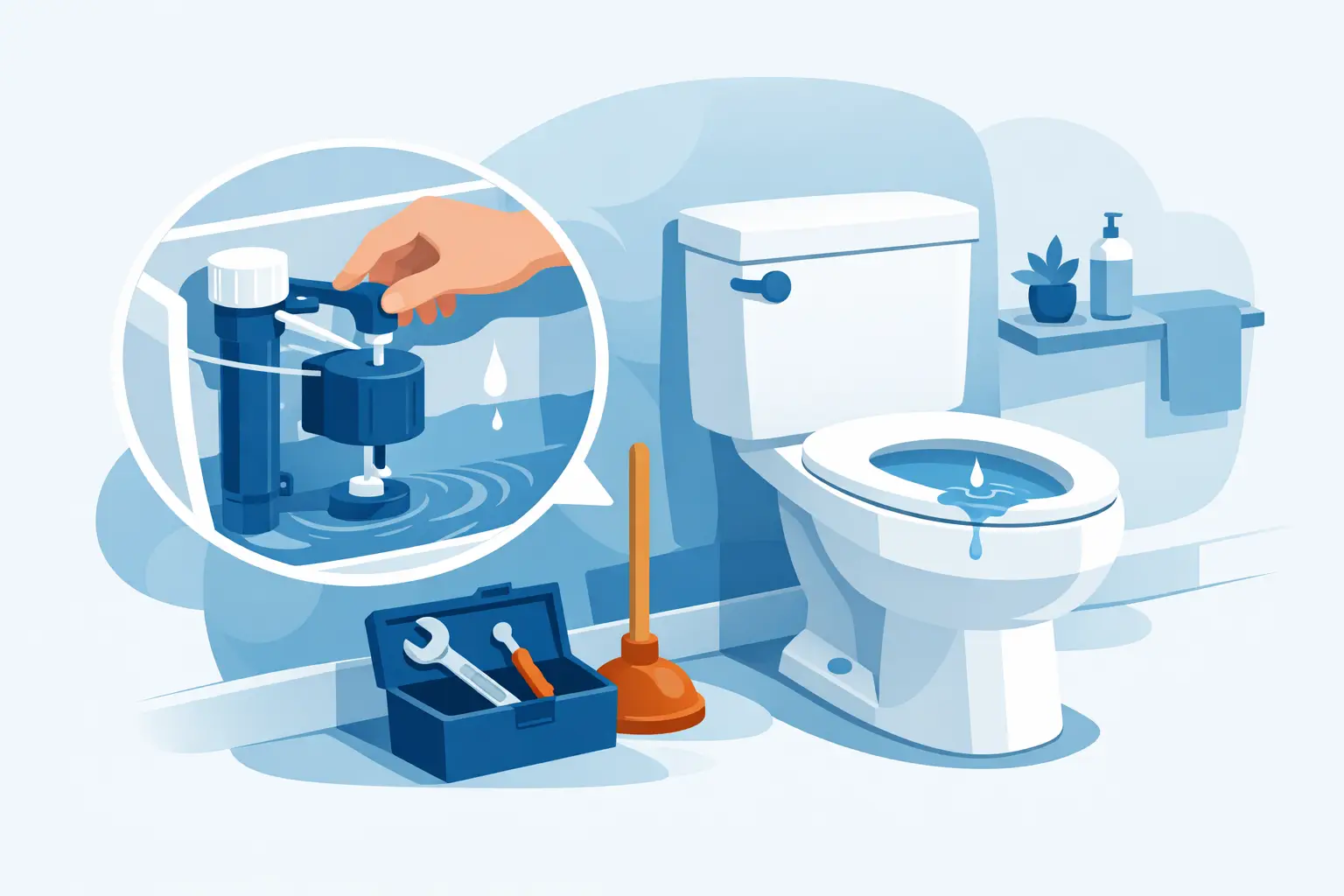
The flapper is the rubber or silicone seal at the bottom of the tank. It lifts during a flush and then drops back down to hold water in the tank. If it is warped, cracked, dirty, or no longer sealing evenly, water leaks into the bowl and the fill valve keeps kicking on to replace it.
A worn flapper is one of the most common reasons a toilet runs. In some cases, mineral buildup along the flush valve seat can also prevent a complete seal, even if the flapper itself still looks decent.
Turn off the water supply valve behind the toilet, flush to drain the tank, and inspect the flapper closely. If it feels brittle, looks misshapen, or has obvious wear, replace it. If it looks usable, clean the sealing surface and reinstall it. This is one of the cheapest toilet repairs, but it only works long term if the flapper matches the toilet model and seats properly.
Inspect the chain and handle
Sometimes the problem is not the flapper itself but the chain connected to it. If the chain is too short, it can hold the flapper slightly open. If it is too long, it may get caught underneath the flapper when it closes.
The handle can also stick in the flush position, especially in older toilets or units with corroded hardware. When that happens, the flapper does not fall back into place as it should.
You want a little slack in the chain, but not so much that it tangles. After adjusting it, flush again and make sure the flapper opens fully and then settles cleanly back into place.
Adjust the water level and float
If the tank keeps filling and the water level rises above where it should, check the float. Depending on the toilet, this may be a ball float on an arm or a cup-style float attached to the fill valve.
The float tells the fill valve when to stop adding water. If it is set too high, the tank overfills and water runs into the overflow tube. That creates a toilet that seems to run nonstop even though the flapper may be fine.
Most floats can be adjusted with a clip, screw, or simple sliding mechanism. Lower the float slightly so the water level stops about an inch below the top of the overflow tube. Small adjustments are usually enough. If the float is damaged or no longer responds consistently, replacement is often more reliable than continued tweaking.
When the fill valve is the real issue
The fill valve controls how water enters the tank after a flush. Over time, internal seals can wear out, debris can interfere with operation, and the valve may stop shutting off cleanly. When that happens, you may hear a constant hiss, a weak trickling sound, or repeated short refill cycles even when no one has used the toilet.
If adjusting the float does not solve the problem, the fill valve may be failing. In many cases, replacing it is the best fix. It is not the most difficult plumbing repair, but it does require turning off the supply, draining the tank, disconnecting the water line, and installing the new part correctly to avoid leaks.
This is also where the difference between a temporary fix and a lasting repair starts to matter. A valve that is partly failing may stop running for a day or two after an adjustment, then start again. If the toilet has been acting up for a while, replacement is often the better investment.
Don’t ignore the overflow tube
The overflow tube is there to prevent the tank from spilling over if the fill system fails. If water is constantly running into that tube, the toilet will keep refilling forever.
That does not always mean the overflow tube itself is broken. More often, it means the water level is too high because of a float or fill valve issue. Still, the tube should be checked for cracks or damage, especially in older toilets where several tank parts may be reaching the end of their service life at the same time.
It depends: repair one part or rebuild the tank?
If you have a newer toilet and the issue is clearly isolated, replacing one part can be the right call. A single flapper or fill valve repair is often enough.
If the toilet is older and multiple components show wear, a full tank rebuild may make more sense. That means replacing the flapper, fill valve, chain, and related hardware together instead of fixing one issue now and another a month later. For landlords, property managers, and business owners, this can be especially practical because it reduces repeat service calls and tenant complaints.
There is also a bigger-picture question. If the toilet is outdated, frequently clogged, cracked, or inefficient, replacement may be more cost-effective than repeated repairs. A professional inspection can help you decide whether you are dealing with a simple running toilet or a fixture that is nearing the end of its useful life.
Signs it is time to call a plumber
Some running toilets are easy DIY fixes. Others keep coming back because the root problem is not obvious or the wrong part has been installed. If the toilet still runs after you replace the flapper, adjust the float, and check the chain, it is time to look deeper.
Call a plumber if the shutoff valve does not work, the tank bolts or supply line are leaking, the toilet runs intermittently without a clear cause, or the problem involves an older commercial restroom fixture. It is also smart to bring in a professional if you have hard water buildup, recurring internal corrosion, or signs that the toilet leak may be affecting the floor or subfloor around the base.
For Central Florida property owners, fast diagnosis matters. A running toilet may seem minor compared with a burst pipe or sewer backup, but it can quietly waste a lot of water and put unnecessary strain on older plumbing components. That is why The Flush Club approaches even small fixture issues with the same focus on clear inspection, honest recommendations, and repairs that are meant to last.
A few mistakes to avoid
One common mistake is overtightening or forcing parts that are meant to be adjusted gently. Another is buying a universal replacement part without confirming it fits the toilet correctly. Universal parts can work well, but not every tank setup is as universal as the packaging suggests.
It is also easy to stop the noise without actually fixing the problem. For example, lowering the float too much may keep the toilet from running, but it can also weaken flush performance. The goal is not just silence. The goal is proper operation, reliable shutoff, and no wasted water.
A running toilet usually starts as a small nuisance, then turns into a bigger cost if it is left alone. If you catch it early, the fix is often straightforward. And if the problem is not as simple as it looks, getting the right repair now can save you time, frustration, and a much higher water bill later.