A water heater usually gets ignored until it starts rumbling, heating slowly, or sending rusty-looking water to the tap. If you are wondering how to drain a water heater safely, the goal is not just getting water out of the tank. The real job is protecting your home, avoiding burns, and preventing damage to the heater while clearing out built-up sediment.
For many Central Florida homeowners and property managers, draining the tank is a straightforward maintenance task when the unit is in decent condition and the drain valve still works properly. But there is a point where a simple flush turns into a repair call. Knowing the difference can save you time, mess, and an avoidable plumbing problem.
Why draining a water heater matters
Over time, minerals and sediment settle at the bottom of the tank. That layer can reduce heating efficiency, create popping or rumbling noises, and put extra strain on the system. In some cases, sediment buildup can also shorten the life of the water heater or lead to uneven water temperatures.
Draining the tank helps remove that buildup. For some systems, a full drain and flush once a year is a good maintenance step. If your water heater has not been serviced in years, though, the situation is less predictable. A neglected tank may have a stuck valve, heavy corrosion, or sediment packed so tightly that disturbing it can expose other problems.
Before you start: know when not to drain it yourself
There are a few situations where DIY is not the best move. If the water heater is leaking from the tank body, draining it will not solve the issue. If the drain valve is corroded, brittle, or already dripping, trying to force it open can make a small problem worse. The same goes for units that are making loud banging sounds, producing discolored hot water, or showing signs of age near the end of their service life.
Gas water heaters also require extra care. You are not working directly on the gas line for a standard drain, but you still need to shut the system down correctly and avoid relighting issues later. If anything about the setup looks damaged, unusual, or unsafe, it is better to stop there and bring in a licensed plumber.
How to drain a water heater safely step by step
The safest approach is slow, controlled, and deliberate. Rushing through this job is how people get scalded or damage an older valve.
1. Turn off the power or gas
For an electric water heater, switch the unit off at the breaker. This step matters. If the heating elements stay on while the tank is partially empty, they can burn out.
For a gas water heater, turn the gas control to pilot or off, depending on the manufacturer instructions and the condition of the unit. If you are not comfortable with gas controls, do not guess. Pause and call for service.
2. Shut off the cold water supply
Find the cold water shutoff valve on the line feeding the top of the heater and close it. This stops new water from entering the tank while you drain it.
If the valve will not turn easily, do not force it with excessive pressure. Older shutoff valves can fail when handled roughly.
3. Let the water cool down if needed
This is the step many people skip. Hot water inside the tank can cause serious burns. If the heater has been running recently, give it time to cool before opening the drain valve. If you need to speed things up, opening a nearby hot water faucet can help release some hot water and reduce pressure, but the tank may still be very hot.
When in doubt, assume the water is hot enough to injure you.
4. Connect a hose to the drain valve
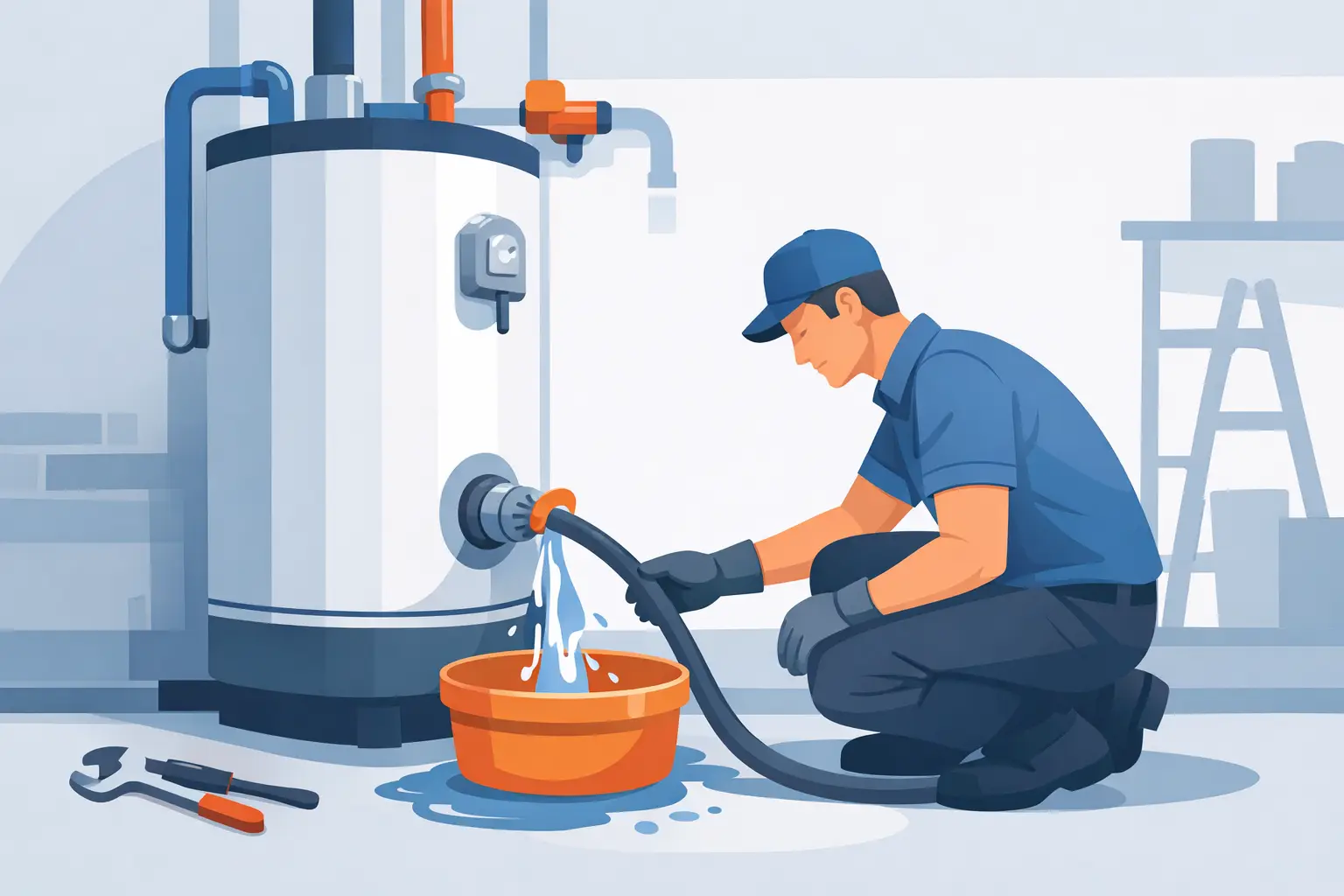
Attach a standard garden hose to the drain valve near the bottom of the tank. Make sure the connection is snug. Route the other end to a safe drainage location, such as a floor drain or an exterior area that can handle hot water and sediment.
Be careful here. Sediment can clog the hose, and older hoses can kink or leak. Keep the hose path as straight as possible so water can flow freely.
5. Open a hot water faucet nearby
Open a hot water faucet at a nearby sink or tub. This helps air enter the system and allows the tank to drain more smoothly. Without that airflow, draining can be slow or inconsistent.
6. Open the drain valve slowly
Use caution and open the drain valve gradually. Water should begin flowing through the hose. If it comes out in a steady stream, let the tank empty. If the flow is weak, sputtering, or stops quickly, sediment may be blocking the valve.
Do not jab tools into the drain opening unless you know exactly what you are doing. On an aging heater, that can break the valve or create a leak that does not stop when the job is done.
7. Flush the tank if the drain is working well
Once the tank is mostly empty, you can briefly open the cold water supply to stir up remaining sediment and flush it out through the hose. This part is often what people mean by a full flush, not just a drain.
You may need to repeat this a few times until the water runs clearer. If the water never clears much, or the flow remains blocked, sediment buildup may be severe enough that the heater needs professional service or replacement planning.
How to refill the tank the right way
Draining is only half the job. Refill the tank incorrectly and you can create new problems.
First, close the drain valve securely and remove the hose. Leave the nearby hot water faucet open. Then reopen the cold water supply valve to let the tank fill. As the tank refills, air will push out through the open faucet. When the faucet runs a full, steady stream without sputtering, the tank is full.
Only after the tank is completely full should you restore power to an electric water heater. This is critical. Turning the breaker back on too soon can damage the heating elements. For a gas unit, return the control setting according to the manufacturer instructions. If the pilot will not stay lit or anything seems off, stop and schedule service.
Common problems during a drain
A few issues come up often, especially with older units.
If no water comes out, the drain valve may be clogged with sediment. If the valve starts leaking after you touch it, the seal may have failed. If the tank drains but the water looks heavily rusted, that can point to corrosion inside the unit. And if the pressure relief valve is dripping or acting unusually during the process, that is another sign the heater may need repair beyond routine maintenance.
There is also the age factor. A water heater that has gone many years without draining may not respond well to its first flush. Sometimes sediment has settled in a way that is masking deterioration at the bottom of the tank. That does not mean draining caused the problem. It means the maintenance uncovered a problem that was already there.
When to call a plumber instead
If you can shut the unit down safely, connect a hose, and get clean drainage without leaks, a basic drain is manageable for some property owners. But if the shutoff valve is stuck, the drain valve is brittle, the unit is leaking, or the water heater is older and showing signs of wear, it is smarter to bring in a professional.
That is especially true for commercial properties, multi-unit buildings, and homes where downtime needs to stay minimal. A failed water heater does not just interrupt hot water. It can damage flooring, walls, stored items, and nearby equipment.
A licensed plumber can tell you whether the tank simply needs a proper flush, a valve replacement, an anode rod inspection, or a full replacement. That kind of diagnosis matters because not every noisy or inefficient heater should be treated the same way.
How often should you drain a water heater?
For many homes, once a year is a reasonable maintenance schedule. Some systems benefit from more frequent flushing if mineral content is high or hot water demand is heavy. In other properties, less frequent service may be enough if the heater is newer and performing well.
It depends on the age of the unit, local water conditions, and whether the tank has been maintained consistently. If you are unsure, having the system inspected is often more useful than guessing your way through a maintenance calendar.
A water heater does a lot of quiet work behind the scenes. Treating it carefully during maintenance is the best way to keep a small task from turning into a major plumbing issue. If anything about the process feels uncertain, slow down and get expert help before a routine drain becomes an emergency.